
Confidence and self-worth: How to believe you’re enough (even when you doubt yourself)
You’re staring at the text you just sent, rereading it three times, wondering if you sounded too needy or not grateful enough or just… wrong somehow.
Or you’re sitting in a meeting with something to say, but you stay quiet because what if it’s stupid? What if everyone thinks you don’t belong here?
Or you’re scrolling through everyone else’s wins and thinking: They have it together. Why don’t I?
And underneath all of it is this one brutal belief: I’m not good enough, so I shouldn’t show up.
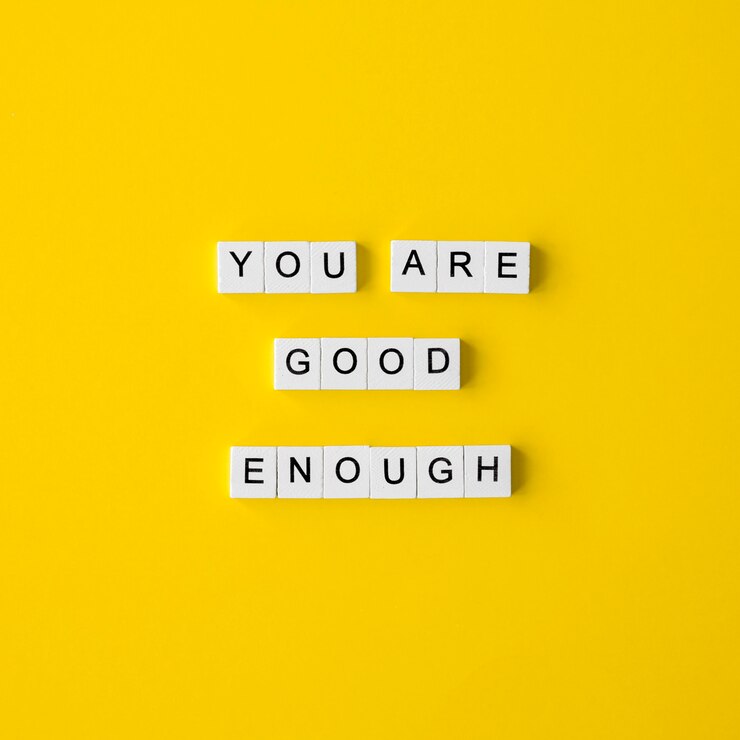
Here’s what I want you to know: you can doubt yourself and still be enough. You can feel nervous and still matter. You can be unsure and still worthy of taking up space.
This post is about the difference between confidence and self worth, why mixing them up keeps you stuck, and self-worth exercises you can actually use today to stop treating yourself like a problem that needs fixing.
No fake hype. No “just love yourself” nonsense. Just clarity and tools that work. By the end, you’ll have a simple way to separate confidence from worth, plus a few self-worth exercises you can repeat on hard days.
Related reads
- Self-worth exercises that don’t require you to “love yourself” yet
- From self-doubt to self-trust: Why small promises build real confidence
- 7 reframes that turn your inner critic into your biggest supporter
- How to build a healthy relationship with yourself
- Self-worth journal prompts: Rewriting the story you tell yourself about you
Confidence and self-worth: What’s the difference?
Let’s start here, because most people use these words interchangeably, and that confusion is part of what keeps you stuck.
Confidence is the belief that you can handle something. It’s built through skills, practice, and experience. It’s about your ability to do a thing.
Self-worth is the belief that you matter, even when you fail, struggle, or aren’t impressive. It’s about your inherent value as a person.
When you understand the difference between confidence and self worth, it gets easier to stop taking every mistake personally.
Why mixing them up hurts
If you treat confidence like worth, your sense of value goes up and down all day based on how well you perform. You nail a presentation and feel worthy. You stumble through small talk and feel like you’re nothing.
That’s exhausting.
Here’s what’s actually true:
- You can be worthy and still nervous about something new.
- You can be confident at your job and still feel deeply unworthy inside.
- You can doubt yourself and still deserve kindness, respect, and belonging.
Confidence is what you build. Self-worth is what you protect on your worst days.

Why you doubt yourself even when you’re doing fine
If you’re reading this thinking, But I AM doing fine. I have a job, friends, a life. Why do I still feel like I’m not enough? you’re not alone.
The inner critic is trying to protect you
Your inner critic uses shame to prevent rejection, failure, or embarrassment. It thinks if it keeps you small, you won’t get hurt.
It feels “useful” in the moment. Like if you criticize yourself first, no one else can surprise you with it. But it costs you energy, self-trust, and the ability to try things that matter.
Common roots of low confidence and low self-worth
You didn’t just wake up one day doubting yourself. It usually comes from:
- Perfectionism. Nothing you do is ever quite good enough.
- People-pleasing. You learned your worth depends on keeping others happy.
- Comparison. You measure yourself against everyone else’s highlight reel.
- Past criticism, trauma, or inconsistent love. You learned early that your value was conditional.
- High standards with low support. You’re expected to perform without the help or grace to actually succeed.
Here’s the reframe: Doubt is a signal, not a verdict. It’s information about what feels risky or unfamiliar. It’s not proof that you’re not enough.
The enoughness myth (what people get wrong)
There’s this lie we all believe at some point: I’ll feel enough when…
When I lose weight. When I earn more. When I heal completely. When I find the right partner. When I hit this goal.
But here’s the truth: worth is not earned by performance.
You don’t become enough after you accomplish something. You already are enough, and then you go do things from that place.
Confidence grows through action, not overthinking. But self-worth? That’s something you remember and practice, not something you achieve.
How to build confidence without tying it to your worth
Confidence and self-worth support each other, but they’re built differently. Here’s how to grow confidence without making it mean something about your value.
Confidence comes from evidence
You don’t think your way into confidence. You build it through small actions that create proof.
Every time you do something uncomfortable and survive it, your brain learns: Oh. I can handle this.
It’s reps over motivation. You don’t need to feel ready. You just need to do the thing enough times that it stops feeling impossible.
Use “minimum brave”
Minimum brave is the smallest action that still counts as trying.
Not “give a perfect presentation.” Just “say one thing in the meeting.” Not “post consistently on social media.” Just “hit publish once.” Not “go to the gym for an hour.” Just “put on your workout clothes.”
Why it works: you teach your brain that discomfort won’t kill you. And you build evidence that you’re someone who shows up, even when it’s hard.
Replace “what if I fail?” with better questions
Your brain loves worst-case scenarios. It’s trying to protect you, but it’s also keeping you stuck.
Instead of spiraling on “What if I fail?” ask:
- “What would I do if it went okay?”
- “What’s the next step I can survive?”
- “What would I tell a friend in this situation?”
These questions shift you from paralysis to possibility.
Self-worth exercises (practical ways to feel enough)
Okay, here’s the part where you actually do something. Pick one exercise. Do it for five minutes. Repeat it until it starts to feel less fake.
Exercise 1: The worth statement (identity anchor)
Write this sentence and fill in five examples:
“My worth does not depend on ___.”
Examples:
- My productivity
- Other people’s approval
- My body
- My grades or income
- My mood or energy level
Read this list when you’re spiraling. It reminds you that your value isn’t conditional.
Exercise 2: Speak to yourself like someone you love
Take one harsh thought you had today. Something like:
- I’m so stupid for saying that.
- I’m always behind. I’ll never catch up.
- No one actually wants me around.
Now rewrite it as if you’re talking to a friend who’s struggling.
Read it out loud. It can help to hear kindness in your own voice, even if you don’t fully believe it yet.
Exercise 3: The evidence list (without overpraising yourself)
Start with: “I’m the kind of person who…”
Then list 10 small proofs. Not accomplishments. Just evidence that you show up.
Examples:
- I’m the kind of person who tries again after messing up.
- I’m the kind of person who asks for help when I need it.
- I’m the kind of person who apologizes when I hurt someone.
- I’m the kind of person who rests when I’m burned out.
- I’m the kind of person who keeps going even when it’s hard.
This isn’t about being impressive. It’s about recognizing that you’re already doing things that matter.
Exercise 4: The boundary micro-move
Practice one small boundary this week:
- One small “no” to something you don’t want to do.
- One small “I can’t today” when you’re overwhelmed.
- One small “I need time to think” instead of answering immediately.
Then tie it to self-worth: “I matter even when I disappoint people.”
Boundaries aren’t about being mean. They’re about remembering you’re a person with limits, not a resource for everyone else to use.
Exercise 5: The shame reset (name, normalize, nurture)
When shame hits, do this three-step reset:
Name the feeling.
“I feel ashamed because I made a mistake at work.”
Normalize it.
“Making mistakes is part of being human. I’m not alone in this.”
Nurture.
Do one kind thing for yourself. Drink water. Step outside. Text a friend. Rest for five minutes.
Shame thrives in silence. Naming it out loud takes some of its power away.
Exercise 6: The “enough” journal prompt set
Pick one prompt and write for five minutes. Be honest. Don’t perform.
- Where am I treating myself like a problem to fix?
- What would change if I assumed I’m already enough?
- What am I afraid people will see if they get too close?
- What do I need more support with right now?
- What is one thing I respect about myself today?
These prompts help you see where you’re holding yourself to impossible standards and where you’re already doing better than you think.

When you don’t feel enough, try this 60-second script
If you’re in the middle of a spiral and need something fast, use this:
- “I’m noticing I feel [scared/ashamed/not enough].”
- “This feeling is loud, but it isn’t fact.”
- “I can be scared and still show up.”
- “My next small step is [one specific action].”
Example:
- “I’m noticing I feel like I don’t belong here.”
- “This feeling is loud, but it isn’t fact.”
- “I can feel out of place and still contribute something.”
- “My next small step is saying one thing in this meeting.”
You’re not trying to make the feeling go away. You’re just reminding yourself that feelings don’t get to make all the decisions.
Signs your confidence and self-worth are growing (even if you still doubt yourself)
You don’t need to feel 100% confident or worthy to know you’re making progress. Look for these signs instead:
- You recover faster after mistakes instead of replaying them for days.
- You ask for what you need more often, even if it feels uncomfortable.
- You stop explaining yourself so much.
- You take imperfect action instead of waiting to feel ready.
- You don’t abandon yourself when you feel embarrassed.
- You choose people and spaces that treat you well, and you leave the ones that don’t.
Growth doesn’t always feel like growth. Sometimes it just feels like you’re getting better at not destroying yourself every time something goes wrong.
You don’t have to feel confident to be worthy
Here’s what I want you to remember:
Confidence is built. Through practice, through reps, through doing the thing even when you’re not sure you can.
Self-worth is remembered and practiced. It’s not something you earn. It’s something you protect and come back to, over and over, every time you forget.
You can doubt yourself and still matter. You can feel unsure and still deserve kindness. You can be a work in progress and still be enough right now.
So pick one self-worth exercise from this post. Try it for seven days. Not perfectly. Just consistently.
You don’t have to believe you’re enough yet. You just have to be willing to treat yourself like you might be.
If you want help staying consistent for the next 30 days, I created a self-worth bundle that walks you through strengthening your sense of enoughness, one day at a time. It’s for when blog posts aren’t enough and you need something that keeps you accountable and moving forward.
Which exercise are you going to try first? Drop it in the comments. I’d love to know what resonates with you.