

How to deal with guilt when you start choosing yourself
You said no.
Maybe you cancelled plans. Maybe you told someone you couldn’t help this time. Maybe you just stopped answering texts after 9pm.
The relief came first. A tiny exhale, like you’d finally put something heavy down.
And then.
The guilt.
It didn’t knock. It just walked right in and sat down and started asking things like: Was that really necessary? Are you sure you’re not just being selfish? What kind of person does that?
And now here you are, three hours later, replaying the whole thing and wondering if you made a mistake.
If choosing yourself makes you feel like the villain of someone else’s story, this is for you.
If you’ve been searching for how to deal with guilt or how to stop feeling guilty when you start setting boundaries, you’re exactly where you need to be.
Quick thing before we start: This is not a guilt-removal article
Guilt is a signal, not a verdict. It’s flagging something (a value, a pattern, a learned rule). That’s actually useful information.
The goal isn’t to stop feeling guilt. The goal is to stop being controlled by it. By the end of this, you’ll know which type of guilt you’re dealing with and what to actually do about it.
Guilt: discomfort that shows up when you break a rule, whether that rule is yours or one you inherited from someone else.

The guilt map: 3 types of guilt (find yours in 30 seconds)
Not all guilt is the same. Treating all guilt the same is why most advice fails. Read through these and pick the one that makes your stomach do that little drop.
Here’s how to handle guilt based on what type it is. First, figure out what kind of guilt you’re dealing with.
Type A: Clean guilt (you did something that actually crossed your own line)
Signs:
- You know exactly what you did
- You’d genuinely do it differently if you could
- The guilt is specific. It’s attached to an action, not just a vague feeling of being bad
What you need: To repair, apologize, make it right. Then actually let it go.
Type B: Borrowed guilt (you broke someone else’s rules, not your own)
Signs:
- You feel bad, but if someone asked you what exactly did you do wrong, you couldn’t fully explain it
- The guilt shows up mainly when you set a boundary, say no, or put yourself first
- The guilt comes with a side of anxiety about what they think
What you need: Permission to stop playing by rules that were never yours. Plus some nervous system calming, because your body has been trained to read “I might disappoint someone” as danger.
Type C: Conditioned guilt (your worth got tied to being easy, available, and accommodating)
Signs:
- You feel responsible for other people’s moods. Like if they’re upset, it must be because of something you did
- Rest feels vaguely lazy or irresponsible
- Saying no feels not just uncomfortable, but morally wrong, like you’re a bad person
What you need: Not just a mindset shift. An identity shift, plus a lot of repetition of new behavior until your body catches up.
Keep reading, but follow the section that matches your type. (Or read all three. You might recognize pieces of yourself in more than one.)
Now let’s handle each type the way it actually needs to be handled. Because the wrong strategy doesn’t make guilt quieter. It makes it louder.
Path 1: How to handle guilt when you actually messed up (clean guilt)
Handling guilt when you actually crossed your own line
Clean guilt has a job. Its job is to show you when you’ve acted in ways that don’t line up with who you want to be. That’s actually a good thing.
The problem isn’t clean guilt. The problem is when you let it turn into punishment, or when you apply it to situations where it doesn’t belong.
Quick check before you keep reading: Did I violate my own values, or did I violate someone’s expectations of me? If it’s the second one, scroll down to Path 2. Clean guilt is only for situations where your own line got crossed, not theirs.
Here’s what to actually do, in this order:
1. Name the value you violated. Not the rule, the value. Not “I broke my promise” but “I care about reliability, and I wasn’t reliable.” There’s a difference. One invites self-hate. The other invites self-understanding.
2. Own the impact. One sentence, no excuses. Not “I’m sorry you feel that way” or a paragraph of justification. Just: “I said I’d be there and I wasn’t. That wasn’t okay.”
3. Repair in a measurable way. What actually changes now? If you can’t answer that question specifically, your apology is mostly just making yourself feel better. Make it real.
4. Release the extra punishment. You’re allowed to make a mistake, learn from it, and move forward without spending three weeks dragging yourself through it. The guilt has already done its job. You don’t owe anyone an ongoing performance of suffering.
The script: “You’re right, I missed that. I’m sorry. Here’s what I’m doing differently.”
That’s it. Clean, clear, done.
Path 2: How to deal with guilt after saying no (borrowed guilt)
How to deal with guilt when you set a boundary
Here’s where most people get tangled up. You set a boundary. Someone gets upset. And your brain immediately connects those two things and concludes: I did something wrong.
But those two things aren’t connected the way your brain thinks they are.
Let’s run through some myths that are probably running your life right now:
Myth: If they’re upset, I did something wrong.
Truth: People can be upset and you can still be right. Someone being unhappy with your decision doesn’t make your decision wrong. It makes it inconvenient for them.
Myth: If I explain more, they’ll understand and accept it.
Truth: Over-explaining is an invitation to debate. The more justification you offer, the more it signals that your decision is up for negotiation. Most of the time, the cleaner the “no,” the faster it’s done.
Myth: A good person is always available.
Truth: A healthy person has limits. Being “always available” isn’t generosity. It’s the absence of a self. And it breeds resentment. In you, eventually. Maybe already.
One practical tool: The 10-minute pause
When someone reacts badly to your boundary, do not respond immediately. Seriously, don’t. Walk away, breathe, drink some water, step outside. Give yourself ten minutes before you do anything.
Because what happens in that first spike of guilt is that you want to fix it: smooth it over, clarify, take it back. And if you respond from that place, you will undo the boundary you just set.
Ten minutes. Then come back with one clear, calm line. That’s it.
Path 3: How to handle conditioned guilt (when your body treats “no” like danger)
Dealing with guilt that comes from people-pleasing conditioning
If you grew up where being “easy” and “no trouble at all” was how you got love or safety, your body learned that disappointing people is dangerous. So when you say no now, it sounds an alarm. And from that state, “just know your worth” is genuinely useless advice.
Here’s what actually works:
Step 1: Regulate first (2 minutes)
Before you try to think your way through anything, calm your body down.
- Unclench your jaw. Drop your shoulders. Slow exhale through your mouth.
- Put one hand on your chest, or press your feet firmly into the floor.
- Say out loud (or just in your head): “I’m safe even if someone is disappointed.”
This sounds small. It isn’t. You’re interrupting the alarm before it takes over.
Step 2: One reframe (one sentence)
“Discomfort is not the same as wrongdoing.”
Feeling bad after saying no doesn’t mean saying no was wrong. It means saying no is unfamiliar. There’s a difference.
Step 3: Tiny reps in low-stakes situations
You can’t think your way out of conditioned guilt. You have to replace the pattern with a new one through repetition.
Start small. Say no to easy things. Decline a group chat. Skip a meeting you don’t need. Tell a friend you can’t make it this weekend.
Feel the guilt. Survive it. Notice it passes.
Do that enough times and your body stops treating “no” like a crisis.
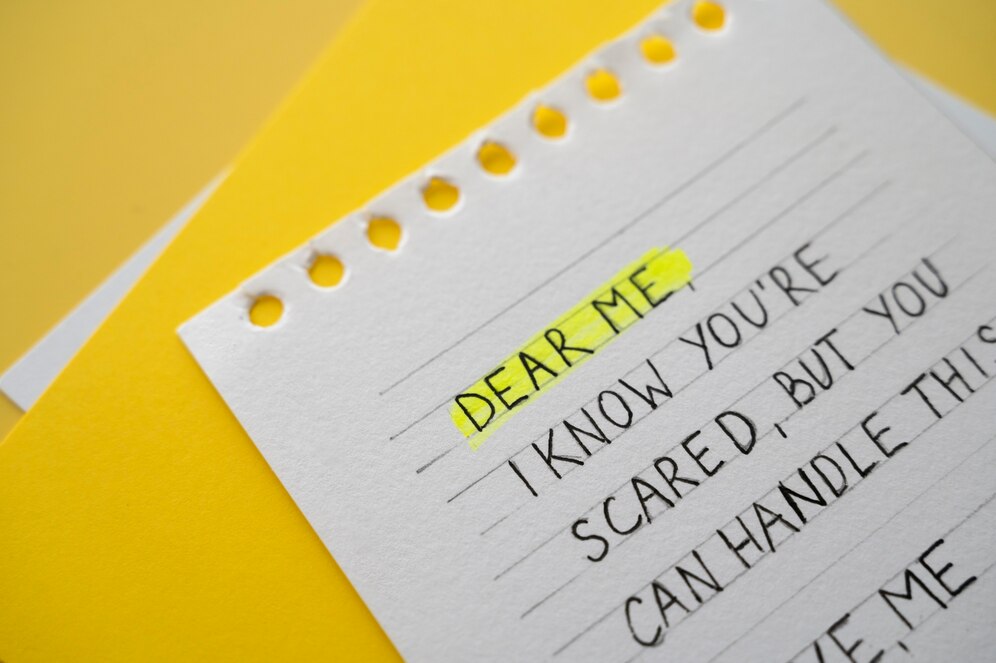
How to say no without feeling guilty: 7 scripts that don’t invite debate
One of the reasons guilt takes over is because we don’t have words ready. So we stumble, we over-explain, we hedge. And suddenly we’re in a whole negotiation we didn’t want to be in.
Here are the scripts. Use them as-is or adjust the tone to fit you.
Simple no:
- “I can’t, but I hope it goes well.”
- “Not this time.”
No with an alternative (only offer this if you actually want to):
- “I can’t help with that, but I could do 15 minutes on Thursday if that works.”
No to family (the hard one):
- “I’m not available for that. I love you, and my answer is still no.”
Note: the comma in that sentence is doing a lot of work. You can love someone and still decline. These are not mutually exclusive.
No to emotional pressure:
- “I hear you. I’m not changing my decision.”
Not “I understand why you’re upset but…” – that opens a debate. Just: I hear you. Still no.
No to the person who keeps asking:
- “Thanks for thinking of me. I’m not taking on anything extra right now.”
No at work:
- “I can’t take that on by Friday. Which priority should I drop to make room?”
This one is useful because it makes the trade-off visible. It’s not a refusal. It’s a request for clarity on what actually matters.
For the moment the guilt spike hits after you’ve said no:
- “This guilt is old programming. I’m choosing my wellbeing.”
Say it like you mean it even if you don’t mean it yet. The meaning comes with repetition.
What to do in the first hour after you set a boundary
The first hour after you hold a boundary is the most vulnerable one. This is when the doubt creeps in, when you start drafting the text that takes it back, when the guilt is loudest.
Here’s your plan for that hour:
Do not reopen the conversation to soothe them. If you said what you said and ended the conversation, let it be ended. Circling back to check if they’re okay is just a softer version of taking it back.
Write one sentence: “I said no because ____.”
Not to send. Just for you. Put the reason in writing so you stop trying to reconstruct it in your head in increasingly worse ways.
Expect the discomfort. You’re going through a kind of withdrawal from approval. That’s why it feels so loud. It passes. It gets shorter every time.
Do one small self-trust action. Tidy one corner. Drink a full glass of water. Step outside for five minutes. Not because it fixes anything. Just because you’re practicing treating yourself as someone worth caring for.
Text a safe person: “I held a boundary. Please remind me I’m not evil.”
Sometimes you just need one person to confirm that you’re still a good human. Find your person for this.
If someone uses guilt to control you
There’s a difference between someone being genuinely hurt by something you did and someone using guilt strategically to pull you back in line.
Here’s how to tell the difference:
“After everything I’ve done for you” – This is scorekeeping, not love. Love doesn’t come with an invoice.
“You’ve changed” – Translation: you stopped being easy to use. “You’ve changed” from someone who benefited from your people-pleasing is not a criticism. It’s an observation that you stopped being convenient.
The silent treatment – This is not hurt feelings. This is punishment. There’s a difference, and you’re allowed to name it.
Your line when guilt is being weaponized:
“I’m open to a calm conversation. I’m not available for guilt trips.”
You don’t have to say it out loud every time. But you do get to draw it.
How to stop feeling guilty over time
You don’t stop feeling guilty by trying harder to be good enough that no one gets upset.
You stop feeling guilty by doing the thing anyway. You set the boundary, hold the “no,” choose yourself, and survive what happens next. Again and again until your body stops treating it like a crisis.
The first time is the hardest. The tenth time is proof.
Not proof that you’re perfect. Proof that you can choose yourself and the world doesn’t end. Proof that people can be disappointed and you can still be okay. Proof that your needs are not the inconvenient, embarrassing thing you were taught they were.
Guilt doesn’t mean you did something wrong. It means you’re changing.
And changing, even when it’s uncomfortable and messy and comes with a side of wobble, is exactly the point.
Before you go: What’s one “no” you’ve been avoiding because the guilt feels too big? You don’t have to act on it today. But it’s worth knowing what it is.
If this post cracked something open for you, the Boundaries and saying no 30-day workbook is where you go deeper.
It’s not a list of affirmations or a vague guide to “communicate better.” Each day has three parts: a journal prompt that gets honest about where you’ve been abandoning yourself, a real challenge you can actually do that day, and an upgrade if you want to take it further.
By the end of 30 days, you’re not just thinking about boundaries. You’re someone who holds them, even when people push back.
If you’re tired of saying yes when every part of you meant no, this is the next step.