
Healing is not linear: Stop chasing perfect healing
Somewhere along the way, a lot of people started treating their healing journey like a performance review.
There’s a version of healing that looks like this: one hard season, a lot of journaling, maybe some therapy, and then you emerge on the other side, calm and regulated and finally, finally okay.
That’s not healing. That’s a movie.
Real healing is messier. It loops back on itself. It stalls for weeks and then shifts on a random Tuesday. It does not follow a timeline, it does not care about your journal streak, and it absolutely does not grade you on consistency.
And yet here we are. Treating recovery like a checklist. Measuring progress by mood. Feeling guilty on the days where we’re just… surviving.
Related reads
- How to forgive yourself: A gentle guide to self forgiveness
- 5 signs of personal growth you’re missing (even when you feel stuck)
- How to build a healthy relationship with yourself
- The real reason you’re hard on yourself (and how to stop)
- Confidence and self-worth: How to believe you’re enough (even when you doubt yourself)
Why perfect healing creates more pressure than progress
Somewhere between the podcasts and the journaling prompts and the Instagram infographics, healing became another thing to be good at.
There are aesthetic morning routines and 75-day challenges and content that still somehow makes you feel like you’re behind. There are people online who seem to have processed every wound, identified every pattern, and healed every relationship with their inner child.
And if you’re still struggling? Still triggered by the same stuff? Still having a rough week six months into “doing the work”?
That must mean you’re doing it wrong.
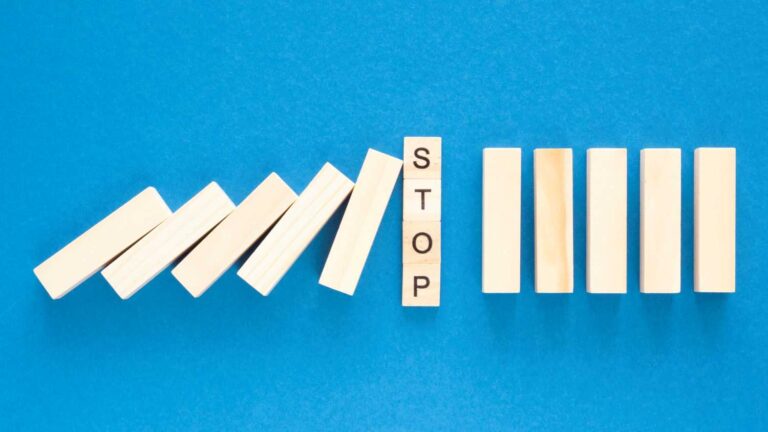
This is the trap. Healing stopped being something that happens to you while you live your life and started becoming another thing to optimize. Another goal to hit. Another area where you can fall short.
The pressure to seem healed, to prove you’ve done the work, to have something to show for all that effort. That’s not healing. That’s just a different kind of suffering with better vocabulary.

Healing is not linear, and that’s not a sign you’re broken
Healing is not linear. This isn’t just a comforting phrase. It’s how emotional growth actually works.
Some weeks you’ll feel like a completely different person. Clear, steady, grounded. And then something small will happen, a difficult conversation, a bad night’s sleep, a moment that mirrors an old pattern, and suddenly you’re back in a feeling you thought you’d moved past.
That’s not regression. That’s the process.
Think of it less like climbing a ladder and more like doing a renovation on a house you’re still living in. Some rooms get better fast. Others keep showing you new problems. Sometimes you make the kitchen beautiful and then the bathroom ceiling falls in.
Progress is still happening, even when it doesn’t look like it.
What healing is not: a steady upward line. What healing is: cycles, layers, seasons. Sometimes expansion and sometimes rest. Sometimes a breakthrough and sometimes a week where you’re just surviving, and that’s enough.
What “good enough growth” actually means
Good enough growth means you stop holding yourself to a standard that doesn’t exist for humans.
It means you notice you’re slightly less reactive than you were six months ago. It means you caught yourself doing the old thing and paused, even if you didn’t stop it completely. It means you slept instead of spiraling. It means you chose to not send that message.
Good enough growth looks like:
- Saying no more often than you used to, even if it still feels uncomfortable
- Noticing you’re in a bad pattern instead of just living inside it
- Resting without spending the whole time feeling guilty about resting
- Choosing one thing to work on instead of trying to fix everything at once
- Returning to yourself faster after a hard moment, even if the hard moment still happened
None of that looks dramatic. None of it makes a great caption. But it’s real, it’s lasting, and it’s what actually changes a life over time.
The question isn’t “am I healed?” The question is “am I slightly more honest with myself, slightly more patient, slightly more self-aware than I was before?” If yes, that’s growth. That counts.
What emotional healing actually looks like
Emotional healing rarely shows up as a transformation you can point to. It’s not usually a moment. It’s a pattern of moments, spread out over a long time.
It looks like fewer three-hour spirals. It looks like catching the thought before it turns into a story. It looks like being able to sit with discomfort for ten minutes instead of immediately trying to escape it.
It looks like a difficult conversation where you didn’t completely abandon what you needed. It looks like a bad day where you treated yourself with something close to kindness instead of contempt.
Signs of real progress that don’t get celebrated enough:
- Recovering from a setback faster than you did last year
- Noticing your triggers without acting on all of them
- Asking for help without a week of shame afterward
- Trusting a small instinct, even once
- Sitting with an uncomfortable feeling instead of immediately numbing it
These are not small wins. They’re the whole thing. They’re what emotional healing is actually built from.

Self acceptance vs self improvement: Why the foundation matters
A lot of people treat self acceptance and self improvement like they’re opposites. Like if you accept yourself, you stop growing. Like the way to get better is to stay uncomfortable with where you are.
That’s backwards.
Self improvement without self acceptance tends to feel like punishment. It’s constant. It’s exhausting. It creates a version of growth that’s always moving the goalpost, where nothing is ever quite enough and every setback feels like a verdict on your worth.
Self acceptance doesn’t mean being satisfied with patterns that hurt you. It means approaching yourself with the same basic dignity you’d offer someone you love.
Here’s what changes when you do:
Self improvement without self acceptance:
- Growth feels conditional (“I’ll be okay when I fix this”)
- Mistakes become evidence of failure
- Rest feels like giving up
- Progress is never enough
Self improvement with self acceptance:
- Growth feels like care, not correction
- Mistakes are information, not verdicts
- Rest becomes part of the process
- Progress can be appreciated in real time
Building growth on top of self-rejection is like building a house on sand. It’ll keep collapsing and you’ll keep blaming yourself for not working harder. Self acceptance gives everything else somewhere to actually stand.
Signs you might be stuck in “perfect healing” mode
These can be easy to miss when you’re inside them:
- Bad days feel like failure, not just bad days
- Healing feels like something you need to finish before you can enjoy your life
- Rest makes you anxious, like you’re falling behind on your growth
- Other people’s progress makes you feel like you’re not doing enough
- Setbacks feel like proof that nothing is working, not just part of the process
- Having the same struggle twice makes you feel hopeless instead of human
If you saw yourself in any of those, that’s not a reason to add “heal my relationship with healing” to your list. It’s just something to notice.
How to set personal growth goals that don’t become pressure
Personal growth goals can be genuinely useful. The problem isn’t the goals themselves. It’s when they become the measuring stick of your worth.
A few things that help:
Measure consistency, not perfection. Did you practice the thing more than you didn’t? That’s progress. A perfect streak isn’t required.
Make the goal smaller than feels significant. If it feels too easy, it’s probably actually sustainable. Start there.
Include maintenance as a goal. “Not losing ground this month” is a valid thing to aim for, especially during a hard season.
Build in flexibility. A personal growth goal that collapses the moment life gets hard wasn’t designed for real life.
Track what you notice, not just what you do. Becoming more self-aware is a legitimate goal. It doesn’t always have a measurable output, but it changes everything.

A gentler way forward
The pressure to heal faster, better, and more efficiently might actually be one of the things slowing you down.
Healing happens in moments of genuine safety. In rest. In the quiet days where nothing dramatic is happening but something is settling underneath. It doesn’t happen through grinding and optimizing and comparing yourself to someone who seems to have it all figured out.
Healing is not linear. The healing journey looks different for everyone, and different for the same person at different points in her life. What it tends to have in common is that it’s slow, it’s not always visible, and it does not wait for you to feel ready.
Good enough growth is still growth.
Rest is still progress.
A bad week doesn’t erase what came before it.
Wherever you are on your healing journey right now, that’s where you actually are. Not behind. Not failing. Just here, doing the thing at the pace it actually takes.
That’s allowed.
If you want more guided support for your healing journey, I created a few workbooks that may help you take the next step at your own pace, no pressure, no perfect timeline required.