

Simple ways to follow through on goals and stop starting over
Sunday night, there’s a plan. A real one this time. Journaling every morning, finally starting that project, no more scrolling in bed until 1am. It feels certain, like this is the version of me who will actually follow through on goals.
Wednesday shows up. The plan is nowhere in sight.
It wasn’t forgetting. It wasn’t laziness either. Something quieter happened, the plan just kind of dissolved, and it was gone before anyone noticed. And now there’s that familiar ache: why can’t I just follow through on the things I say I want?
The honest answer isn’t the one that gets said enough: this is almost never about laziness or a lack of discipline. It’s usually about self-trust, promises that were too big to begin with, and a system that was never actually built to hold you.
If this loop feels familiar, especially if it’s happened enough times that it’s started to feel embarrassing, that feeling makes sense. Restarting the same goal for the fifth or sixth time does something to a person. It stops feeling like a fresh start and starts feeling like proof you’re just not built for this. That’s a painful place to sit, and honestly, of course trying again feels harder after that.
If this has happened enough times, it can start to feel personal, like maybe other people just have something you don’t. But usually the problem isn’t a broken character. It’s a broken setup. Shame makes people hide from their own goals, and hiding makes consistency so much harder. After enough restarts, even a small goal can start to feel unsafe to try again, and that reaction makes total sense too.
None of that means anything is wrong with you. The approach just needs to change, and that part is doable.
Related reads
How to follow through on goals when willpower keeps running out
Most advice about follow-through treats it like one problem: not enough willpower. Get more of it, try harder, push through the resistance. But when you actually look closely at where things fall apart, willpower is almost never the real issue. It’s usually a gap somewhere specific, and gaps are much easier to close than character flaws.
Think of the next section less like a pep talk and more like a diagnostic. Somewhere in this list is probably the actual reason this particular goal keeps slipping through your fingers. Once that’s named, the fix tends to be a lot smaller than expected.
What usually causes the slip:
- The goal was too vague to act on
- The promise was bigger than your current capacity
- There was no obvious next step, so your brain kept stalling
- Something emotional was quietly resisting it
- Motivation was doing a job a system should’ve been doing
- There was no way to actually see the progress you were making
Chances are, you’ll recognize yourself in at least two of these.
The goal was never specific enough to act on
“Get healthier.” “Be more productive.” “Work on myself.” These sound like goals, but there’s no actual action hiding inside a sentence like that, so your brain has nothing to grab onto.
It tends to look like repeating the goal to yourself over and over, and somehow it never turns into a Tuesday afternoon action.
The fix is to get specific to the point of feeling almost boring. Not “get healthier,” but “walk for 15 minutes after lunch on weekdays.” Not “work on myself,” but “write three sentences before bed.” A goal needs to be small and concrete enough that you could picture yourself doing it right now, in this exact room, today.
Quick gut check: could this literally start in the next ten minutes? If not, it’s still too vague to hold onto.
Someone tells themselves for months that they want to “get better with money,” and nothing changes, because there was never an action attached to it. The version that actually sticks is “check my bank balance every Sunday at 8pm.” Boring, specific, doable, and that’s exactly the point.
Try swapping “I need to work on this” for “the next concrete step is ___, and I’ll do it at ___.”
The promise was bigger than what your life could hold right now
This one’s sneaky because it disguises itself as ambition, not a mistake. “I’ll work out every day.” “I’ll meditate for 30 minutes every morning.” It sounds strong. For most people just starting out, it also isn’t sustainable yet, and there’s no shame in that.
It tends to look like this: crushing it for four or five days, feeling amazing, then one missed day quietly turns into a full stop. Not weakness. Just a promise that never matched where things actually were.
Shrink the promise until it feels almost embarrassingly easy. Instead of working out every day, try moving your body for 10 minutes after lunch. Instead of 30 minutes of meditation, try sitting quietly for 2. Building up is always possible later. What isn’t possible is building trust with yourself on a promise you can’t actually keep yet.
Someone commits to writing 1,000 words a day and burns out completely in three. The version that sticks is 100 words, five minutes, done. Small enough that quitting would feel almost silly.
A useful reframe here: what’s the smallest version of this I could keep for 30 days straight, no exceptions?
There was no obvious next step
This is the one that shows up as “I know I should, I just… don’t.” Wanting to write, sitting down, not knowing where to start, closing the laptop again. Wanting to start the project but the first move isn’t clear, so the whole thing quietly gets avoided.
It looks like feeling stuck in place despite genuinely wanting to move forward.
Before committing to a goal, name the literal first physical action. Not “start the project,” but “open the document and write one sentence.” Not “clean the house,” but “put three things away.” Your brain avoids anything fuzzy. Give it something so obvious there’s nothing left to decide.
“Learn Spanish” stalls out for months as an idea. “Open Duolingo for one lesson after brushing my teeth” gets done the same day, because there’s nothing left to figure out.
A more honest question to sit with: what’s the tiniest physical action I could take right now, even if it’s a little imperfect?
Something emotional was quietly getting in the way
Sometimes the goal isn’t unclear and it isn’t too big. Sometimes there’s a feeling underneath it that nobody’s actually named out loud. Maybe it’s fear of failing where people can see. Maybe it’s guilt, or grief, or some old story about not being the kind of person who finishes things.
That tends to feel like avoiding a task that’s simple on paper, a small flinch every time it crosses your mind.
This is the one that asks for curiosity instead of criticism. What am I actually afraid will happen if I do this? Sometimes naming the fear, even just to yourself, loosens its grip a little. Resistance usually means something underneath needs attention, not that you’re failing or broken.
Someone avoids sending their creative work to anyone for months and calls it laziness. Underneath, it’s a quiet fear of being judged. Once that got named, the avoidance made more sense, and slowly got easier to work with.
Try trading “what’s wrong with me” for “what am I actually afraid of here, and is it even true?”
Motivation was carrying weight a system should’ve carried
Motivation is a mood. It shows up, it leaves, and it was never built to carry you through 30 days in a row. Research on habit formation shows that repeated actions in the same context are often what drive behavior, not willpower alone.
If a whole plan depends on feeling inspired on any given morning, that plan was built on something unreliable from the start, probably without anyone meaning to. That pattern tends to look like great days when the mood cooperates, and the whole thing collapsing the second life gets busy, tired, or off.
The move here is removing the decision entirely. Lay out gym clothes the night before. Put the journal on the pillow so it has to be moved before bed. Pick a specific time and place so there’s nothing left to negotiate with yourself in the moment. The goal isn’t inspiration. The goal is setting things up so the right action is just easier to grab than the wrong one.
Someone waits to “feel ready” to cook healthier meals, and it never happens on a busy week. What actually works is prepping ingredients on Sunday, so by Tuesday there’s nothing to decide, just something to heat up.
Try asking: what’s one piece of friction I can remove tonight so tomorrow’s version of me doesn’t have to decide anything at all?
There was no visible proof any of it was working
If progress can’t be seen, it doesn’t quite feel real, even when it’s happening. A lot of follow-through quietly dies just because nothing was tracked, so there was never a moment of looking back and thinking, wait, I actually did this five days in a row.
This one tends to feel like doing better than it seems, simply because there’s no evidence sitting in front of you to prove it.
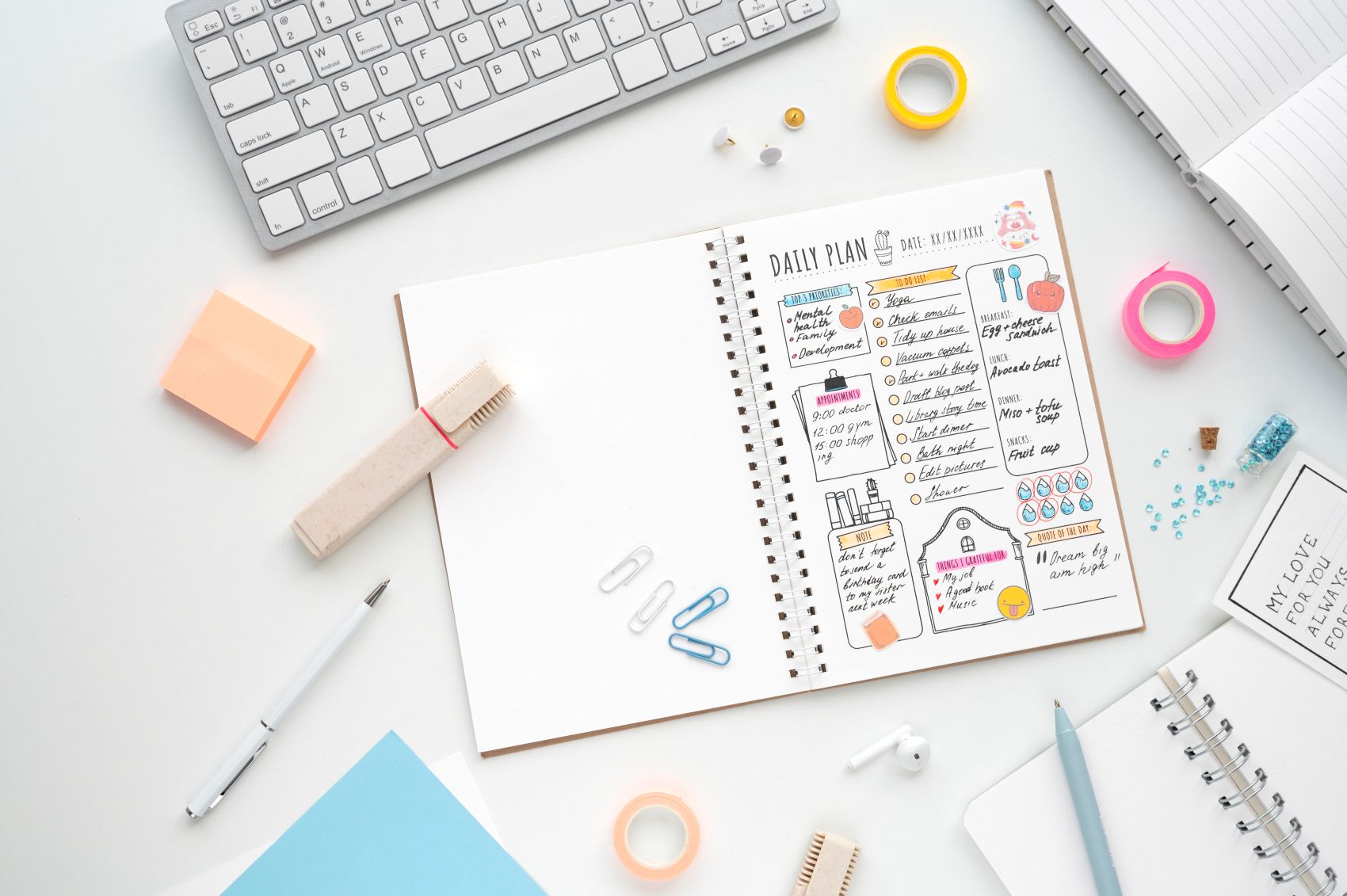
Keep the tracking stupidly simple. A checkmark on a calendar. A tally on a sticky note. One line in a notes app. It doesn’t need a system. It just needs to live somewhere it’ll actually get seen.
Someone feels like they’ve failed at consistency all year, then finally starts a simple checkmark calendar and realizes they’ve actually shown up four out of every five days. It was happening the whole time. It just wasn’t visible.
Instead of “I never stick with anything,” try asking: where can I put a checkmark today so future me has proof this happened?

What not to do when you slip
A missed day tends to trigger a familiar spiral, and most of that spiral makes things worse instead of better. A few things worth avoiding on purpose:
- Don’t make the next version bigger out of guilt, that’s how burnout starts
- Don’t wait for a perfect Monday, Wednesday works fine
- Don’t mentally restart from zero, one missed day isn’t a lost streak
- Don’t confuse a slip with proof that this was never going to work
One missed day is just one missed day. It only turns into something bigger when it gets treated like a verdict.
Start here today: A simple reset
Somewhere in the six snags above is probably the actual reason things keep slipping. Here’s what to do with that, right now, not someday:
- Pick one goal that’s been circling for a while
- Find the snag from the list that actually fits
- Shrink the promise down until it feels almost too easy
- Attach it to a specific time and place
- Track it somewhere visible, even just one checkmark
- Repeat tomorrow, no perfection required
That’s the whole plan. Three or four minutes, most days. The goal was never a perfect day. It’s keeping the habit from falling apart, because that’s what actually builds follow-through over time.
One promise a day, on purpose
A small practice worth trying for the next week: Each morning, pick exactly one thing to follow through on that day. Not five. One. Small enough that skipping it would feel a little silly.
At the end of the day, just notice: did it happen? No spiraling if it didn’t, just notice, and try again tomorrow. After seven days, there’s real evidence instead of a vague feeling about whether follow-through is even possible.
The point of this isn’t productivity. The point is proving, in a small and undeniable way, that you can still be trusted by yourself. That’s a different kind of payoff than checking a box, and it’s the one that actually changes how the whole thing feels going forward.
Journal prompts to find where this actually breaks down
Some of these will land harder than others, and that’s usually a sign they’re worth sitting with a little longer.
- What’s a goal I’ve restarted more than three times? What usually happens right before I quit?
- What does my follow-through pattern protect me from?
- What feels safer, staying inconsistent or risking real change?
- What part of me benefits from starting over instead of staying steady?
- Is the goal I’m chasing specific enough that I could start it in the next ten minutes?
- What’s the smallest version of this goal that would feel almost too easy?
- What promise do I keep breaking because it was never sized for real life?
- Where in my day is there already a natural moment I could attach this to?
- What does giving up usually look like for me, quietly fading out or one dramatic quit?
- What would change if I stopped waiting to feel motivated before starting?
- Whose voice do I hear when I don’t follow through? Is it kind, or is it harsh?
- What’s one small promise I could make today that I’m almost certain I’d keep?
- If a friend described my follow-through pattern back to me, what would they actually say?
- What would it feel like to see real, written proof that I follow through more than I think I do?
Follow-through gets built in small, unglamorous moments
None of this happens in one big leap. Self-trust grows the same way anything real grows, through repetition, not through a single perfect plan. One kept promise, even a tiny one, does more for confidence than the most detailed plan sitting untouched in a notebook.
That’s genuinely good news, because it means no dramatic overhaul is required. No perfect version of motivation showing up on command. Just a starting point small enough to actually hit, and the willingness to hit it again tomorrow, even on a day that feels off.
A smaller promise, a clearer next step, and one honest look at what’s actually been getting avoided, that’s the real formula here. Not more willpower. Just a kinder, more specific way of keeping commitments to yourself.
Most people quit a goal because they never found their actual snag. They just decided they were undisciplined and moved on to blaming themselves instead of getting curious about what was really happening. It doesn’t have to go that way this time.
Pick one goal that’s been circling. Find the snag. Shrink it down. Do the small version today.
A new personality was never the requirement here. Just a smaller promise, a clearer next step, and enough honesty to notice what’s actually been getting in the way.