
Decision fatigue is draining you (and it has nothing to do with time)
It’s 4pm and you’re staring at your screen unable to write one email. Not because it’s complicated. Not because you don’t know what to say. Just because something has run out.
Or it’s 6pm and someone asks “what do you want for dinner?” and the question genuinely feels like too much. Your brain just refuses to engage with it. So you snap a little, or shrug and say “whatever you want,” and feel vaguely guilty about both.
Or it’s Sunday night and the week ahead is sitting in your head like a pile of wet laundry, and even thinking about where to start feels exhausting. Not because the week is that hard. But because you’ve been making small choices since 7am and there’s nothing left.
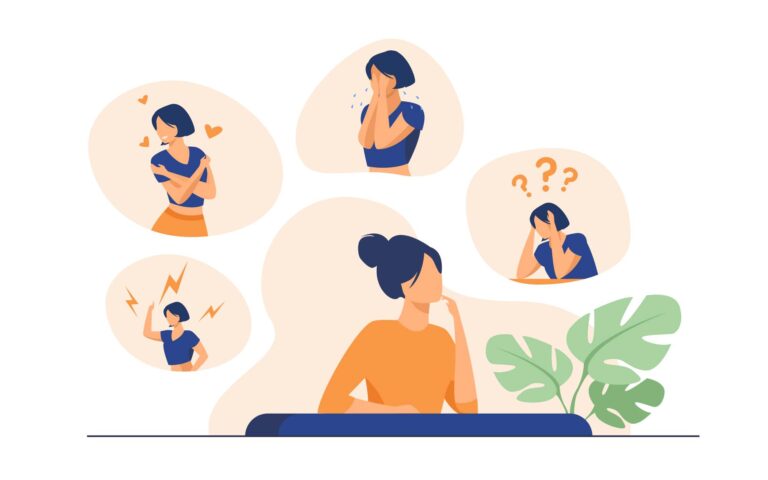
This is decision fatigue. And it doesn’t get talked about nearly enough, because it doesn’t look like a crisis. It looks like being tired. It looks like being short-tempered. It looks like procrastination, or brain fog, or just not handling stress well. But a lot of the time it’s none of those things. It’s just what happens when your brain has been asked to decide too many things for too many hours without a break.
Here’s what matters: this is not a time problem. More hours wouldn’t fix it. It’s an energy problem. And once you understand where the drain is actually coming from, reducing it becomes much more concrete than you’d expect.
Decision fatigue happens when the cumulative weight of too many choices wears down your mental energy throughout the day. The more you decide, the harder even simple decisions become. The fix isn’t better time management or more discipline. It’s reducing the number of things your brain has to actively choose between, especially the low-value ones that eat the same mental bandwidth as important ones.
Related reads
- Why you can’t make decisions and how to break free from decision paralysis
- Values based decision making framework: A simple way to make better choices
- Best techniques for decision making when every option feels wrong
- 9 tools for decision making when you feel stuck
- What are my core values? The ultimate guide to finding what actually matters to you
Why decision fatigue is a bigger problem than most people realize
The size of a decision doesn’t determine how much energy it costs.
Choosing what to eat for breakfast and deciding whether to take a new job draw on the same cognitive resource. One feels more significant. But your brain doesn’t distinguish between “this matters” and “this is trivial” in terms of the fuel it burns to process and decide. It just decides, and uses something each time.
The issue is that modern life has more daily micro-choices than any previous generation in history. What to look at first when you open your phone. Which of seventeen tabs to read. Whether to respond to that message now or later. What to wear. Whether that email needs to happen today. Whether to speak up in a conversation or let it go. What to prioritize when everything feels equally urgent.
None of these are significant. But they pile up. And by the time a real decision arrives, something you actually need to think clearly about, you’ve already spent a lot of what you had.
There was a period where I noticed I couldn’t make a single decision without running it by someone first. Not big life decisions. Small ones. Should I change the format of something I was working on? I’d ask a friend. Should I take a day off? I’d talk it through with someone else first. Should I send that email the way I’d written it, or rewrite it? Another opinion, please.
At some point I sat with that and realized: I already knew what I wanted to do in almost every single case. I knew before I picked up the phone. I was just looking for someone to confirm it so I didn’t have to be responsible for the choice.
That’s when it clicked that the exhaustion wasn’t coming from the decisions themselves. It was coming from the loop I was running before every single one. Check in, get reassurance, then maybe act. Sometimes ask a second person just to be sure. Sometimes a third. By the time I’d gathered enough opinions to feel safe, I was too drained to do anything with them.
The problem wasn’t that I couldn’t decide. It was that I’d stopped trusting myself to.
The 4 places decision fatigue is stealing energy you don’t know you’re losing
Most people are bleeding energy in four specific areas, and at least two of them tend to come as a surprise.
Your morning, before the day even starts
The morning is where cognitive drain does the most structural damage. What you spend in the first hour sets the baseline for everything that follows. What to wear. What to eat. Whether to check your phone. What to tackle first. Whether to answer that message before work or after.
If your mornings are a string of unresolved small choices, you’ve drawn down a significant chunk of your daily capacity before doing a single thing that matters. And because these drains are invisible, because you didn’t make any big decisions, it doesn’t occur to you that this is why 10am already feels harder than it should.
Morning is the highest-leverage place to build defaults. Even removing two or three recurring choices here will noticeably change how much you have left by midday.
The constant low-level management of work
Most productivity advice focuses on the tasks. The real problem is often the deciding between tasks.
Every time you look at your to-do list and figure out what to do next, that’s a decision. Every time you assess which email deserves attention, that’s a decision. Every time you switch tasks and have to reorient, choose what counts as done, decide what comes next, that’s multiple small choices layered on top of each other.
The work itself is often fine. It’s the constant meta-layer of managing the work that grinds people down. If you’ve ever had a day where you were technically busy but got very little done and felt inexplicably drained at the end, this is usually what happened. The deciding-what-to-do ate the energy you needed to actually do things.
Meals, logistics, and the daily weight of being a person
What to cook. What to buy. When to run errands. Whether to do that chore now or later. These questions land throughout the day and each one requires a small response. The cumulative cost is higher than it looks.
“What do you want for dinner?” is probably the most universally dreaded question asked between 5 and 7pm. Not because food is complicated. Because by that point the mental load is nearly at capacity, and the question requires open-ended generation of options, evaluation of preferences, and logistics. It’s a lot to ask of a depleted brain.
This is why people who meal plan swear by it with disproportionate enthusiasm. It’s not really about the meals. It’s about removing an entire category of daily choices from the hours when there’s the least capacity for them.
Personal choices, boundaries, and anything involving other people’s feelings
This one gets missed entirely in most conversations about daily cognitive load, and it’s arguably the most draining category of all.
Every time you have to decide whether to say yes or no to something, whether to speak up or let it go, whether to protect your time or accommodate someone, that’s cognitive fuel being spent. And unlike choosing what to eat, these choices usually come with emotional weight attached, which makes them cost even more.
People who struggle with people-pleasing and boundary-setting tend to experience disproportionate exhaustion, often without understanding why. It’s not just the emotional toll. It’s that they’re running a constant low-level process of evaluating what others need, what’s expected, what’s safe to say. That process never fully turns off. And it draws from the same well as everything else.

What to simplify first: Organized by energy return, not category
This isn’t a complete life overhaul. It’s about finding the highest-return changes and starting there.
Reduce low-value choices ruthlessly
The goal is not to stop making decisions. It’s to stop spending real cognitive fuel on ones that genuinely don’t matter. Whether to wear the blue top or the grey one. Whether to reply now or in twenty minutes. Whether to have yogurt or eggs.
The outcome of these choices is almost never significant. But your brain doesn’t know that in advance. It processes the choice anyway, and processing has a cost.
A useful practice: notice for one day every time you pause and deliberate over something that doesn’t actually matter. Most people are genuinely surprised by the frequency. Once you can see it, catching yourself and just deciding fast becomes much easier.
Pick one. Any one. Move on.
Create defaults for anything that repeats
A default is a pre-made decision you don’t have to revisit. A standard weekday breakfast you make without thinking. A set reply template for messages that come up regularly. A standing time block for certain types of tasks. A go-to order for when you’re at a particular place.
Every default is one fewer active choice in the day. When you have ten running quietly in the background, the accumulated savings are real.
The goal isn’t to make every day identical. It’s to make recurring, low-stakes choices automatic so you stop actively processing them each time. That frees your clearest thinking for the things that actually need it.
Batch decisions into dedicated time
Instead of deciding what to cook at 6pm when you have nothing left, decide Sunday evening. Choose what you’re wearing tomorrow the night before rather than at 7:30am. Go through emails at set times rather than in reactive drips all day. Set priorities once in the morning rather than re-evaluating constantly.
When you batch, two things happen. You move choices to a time when you have more capacity. And you remove them from the moments where they’d otherwise interrupt something else, adding a switching cost on top of the cognitive drain.
One category moved to a better time makes a noticeable difference.
Keep fewer options visible
More options mean more evaluation, and more evaluation means more mental load spent choosing before you’ve decided anything.
A wardrobe with fifteen things you actually wear is genuinely easier than one with sixty things, half of which you never touch. Five go-to dinners is easier than an app full of recipes requiring scrolling and ingredient-checking. Three clear daily priorities are easier to act on than a sprawling list of forty.
Fewer visible options doesn’t mean fewer possibilities. It means you’ve done the evaluation work in advance, at a better time, and left yourself a curated shortlist to work from in the moment. That’s not limitation. That’s intelligent design.
Repeat what works without apologizing for it
There’s a belief that variety equals quality of life. That eating the same breakfast several days running, or following the same morning structure most weekdays, means you’re not fully living.
That belief carries a quiet but real daily drain.
Chosen repetition is one of the most effective tools for protecting your energy. The same breakfast that takes three minutes and you know is good. The same workout you’ll actually do instead of the new routine you have to figure out each time. The same general shape to your week so you’re not rebuilding from scratch every Monday.
This isn’t settling. It’s protecting your best thinking for the things that genuinely need it.
Build your personal decision filter
This turns everything above into a system rather than a list of tips.
Most decision fatigue happens because people apply roughly equal attention to every incoming choice. What to eat for lunch gets nearly as much deliberation as whether to take on a new project. The missing piece is a quick way to calibrate how much something actually deserves before you spend time on it.
Three questions. Ten seconds each.
1. Does this actually matter?
Not in the abstract sense. In the real sense: does this choice meaningfully affect your day, your goals, your wellbeing, or a relationship you care about? If the honest answer is no, it gets five seconds maximum. Pick anything reasonable and move on.
If the answer is yes, it gets the attention it deserves. But most things that arrive as decisions aren’t in this category, and knowing that changes how you approach them.
2. Does this need my attention right now?
A lot of daily exhaustion comes not from the decision itself but from the timing. Something arrives and your brain automatically starts processing it, even when right now is genuinely not the right moment.
Asking “does this need my attention today?” interrupts that reflex. A lot of things that feel urgent because they just arrived aren’t actually urgent. They just look like it because they’re new and in front of you. Decisions that can wait should wait, ideally until a time you’ve already set aside for that category.
3. Can this be made easier, repeatable, or automatic?
If something keeps costing you energy repeatedly, it’s worth spending five minutes building a default for it. When you notice yourself making the same kind of choice for the fourth week running, that’s a signal a default would serve you well.
Run anything through this filter. It interrupts the habit of treating every choice as though it deserves equal weight, which is where so much daily drain quietly lives.
The places you’re overthinking that deserve far less energy
Some categories consistently eat more than they should.
Clothes. The energy spent on what to wear is genuinely disproportionate to what’s at stake. Choose tomorrow’s outfit the night before as a non-negotiable habit. Build a working set of pieces you feel good in and reach for those rather than excavating the full wardrobe each time. A few default combinations for predictable contexts removes the question from the morning pile entirely.
Meals. Three to five reliable dinners on rotation is not deprivation. It’s protecting your afternoon. A default breakfast you make without thinking saves a decision at the exact point in the day when you need your wits most. Twenty minutes of meal planning on Sunday removes approximately thirty-five choices from the week’s most depleted hours.
Scheduling and task management. Re-evaluating priorities throughout the day costs more than most people account for. A single morning planning window, standing time blocks for predictable work types, and a commitment to the structure you set rather than continuously second-guessing it removes the ongoing overhead without touching your actual responsibilities.
Emails and messages. The inbox is a particularly effective cognitive drain because it looks like work while often just being deciding-about-work. Each message requires an assessment before you’ve typed a single reply. Templates for common responses, set windows for checking, a simple triage rule that moves things into now, later, or not mine, all reduce the micro-decisions without letting anything important fall through.
Social plans and invitations. By the time an invitation arrives, you often don’t have enough left to honestly evaluate whether you want to go, whether you’ll be glad you went, whether it actually fits the week. The result is either a reflexive yes (overcommitment, resentment later) or a reflexive no (avoidance, missing things that would have been good). Neither is a real decision. Both are a depleted one. “Let me check and come back to you” is a complete sentence, and a policy of not responding to invitations the same day they arrive protects the quality of those choices.
When simplifying is not the same as avoiding
This matters enough to say clearly, because there’s a version of this that tips into avoidance.
Reducing decision fatigue means clearing away unnecessary weight from low-value choices so you have genuine capacity for the ones that actually matter. It doesn’t mean offloading hard or important decisions onto defaults because they’re uncomfortable.
If there’s a conversation you’ve been putting off, a situation that needs addressing, a choice that keeps getting deferred because it’s loaded, those aren’t candidates for a default. They deserve your actual attention, ideally at a time when you have it.
There’s also a version where simplifying becomes a sophisticated reason to never sit with anything difficult. One is protecting your resources. The other is using the language of efficiency to stay comfortable. Usually you know which one it is.
If something important keeps not getting your attention, it’s worth asking honestly: is this a capacity problem, or is the decision fatigue narrative providing convenient cover for avoidance?
The low-decision day reset checklist
Pick five of these this week. Not all of them. Start where it’s easiest.
Tonight:
- Choose tomorrow’s outfit before you go to sleep
- Write down the three most important things you need to do tomorrow before you close your laptop
- Decide at least two of the week’s dinners so those questions don’t land at 6pm
This week:
- Create one template reply for a message type that comes up regularly
- Set specific times to check messages and stop outside of those windows
- Remove one recurring morning choice by building a default for it
- Pick three to five go-to dinners you rotate through and stop reopening that question daily
- Block one focused work chunk each day that doesn’t get interrupted by checking or task-switching
- Identify the single repeating choice that drains you most and build a default for it this week
Ongoing:
- Before deliberating on anything, ask: does this actually matter, does it need my attention today, can I make it automatic?
- When you catch yourself spending more than two minutes on something that won’t matter next week, just decide and move on
- Notice when you’re managing work instead of doing work, and move those meta-choices into a single morning window

Questions people ask about decision fatigue
What does decision fatigue actually feel like day to day?
It rarely announces itself as fatigue. It shows up as irritability, disproportionate frustration at small things, a stickiness where you can’t seem to start anything that should be straightforward. By the time you notice you’re depleted, the drain has usually been building for hours. The afternoon wall many people hit isn’t always about caffeine or sleep. Often it’s about having used up the day’s mental capacity by early afternoon without realizing it was happening.
Is decision fatigue the same as being indecisive?
No, and it’s worth separating these. Indecisiveness is a pattern, usually rooted in fear of making the wrong call or low self-trust. Decision fatigue is a resource problem. It’s what happens to any brain, including decisive ones, when too many choices have been processed without recovery. A normally clear, confident person can hit a wall by mid-afternoon and find themselves unable to choose between two options that would usually take ten seconds. That’s not indecisiveness. That’s depletion. And the solutions are different.
How do I reduce decision making at work when most of my choices aren’t optional?
The choices themselves may not be optional, but how you manage the meta-layer often is. Batching your inbox rather than staying reactive all day reduces the micro-decisions that interrupt your work. A single morning planning window, where priorities get set and then held rather than re-evaluated constantly, removes the ongoing overhead from your working hours. Fewer open loops, clearer rules about what gets your attention when, and less task-switching all reduce the cognitive drain without changing your actual responsibilities.
Does decision fatigue only affect really busy people?
Not at all. Mental capacity gets depleted by volume of choices, not by how significant those choices are. A full day of domestic decisions, childcare logistics, meal choices, and social navigation can drain someone just as thoroughly as a high-pressure work day. The stay-at-home parent who is short-tempered by evening and the executive who is short-tempered by evening have both used up the same resource. It just happened in different contexts.
What to take from this
Decision fatigue isn’t a character flaw. It isn’t a sign you need to be tougher, manage time better, or want things less. It’s a straightforward resource issue: your brain has a daily capacity for active choosing, small choices burn through it just as fast as large ones, and when it runs out, everything harder than the bare minimum becomes genuinely difficult.
The good news is that this is one of the more solvable problems in daily life. Not through motivation or discipline. Through reducing the number of things your brain has to actively weigh before it gets to the things that matter.
Most of what’s wearing you out isn’t worth the mental load it’s taking. Once that becomes clear, simplifying your life stops feeling like settling. It starts feeling like finally protecting something worth protecting.
Ready to stop overthinking every choice?
Reading about decision fatigue is one thing. Actually rewiring the patterns that cause it is something else.
If you recognize yourself in this article, the chronic second-guessing, the asking everyone else before trusting your own read, the paralysis that kicks in before even small choices, that’s not a time management problem and it’s not a personality flaw. It’s a self-trust problem. And it’s one that can actually be worked on.
The Decision making 30-day workbook is built specifically for this. Each day has three parts: a journal prompt that gets honest about where you’re getting stuck, a real challenge that has you actually making decisions instead of just thinking about them, and an upgrade that helps you build systems so trusting yourself starts to become automatic.
Thirty days. Three steps a day. One decision at a time, until the version of you that chooses and moves forward without spiraling is the one that shows up by default.