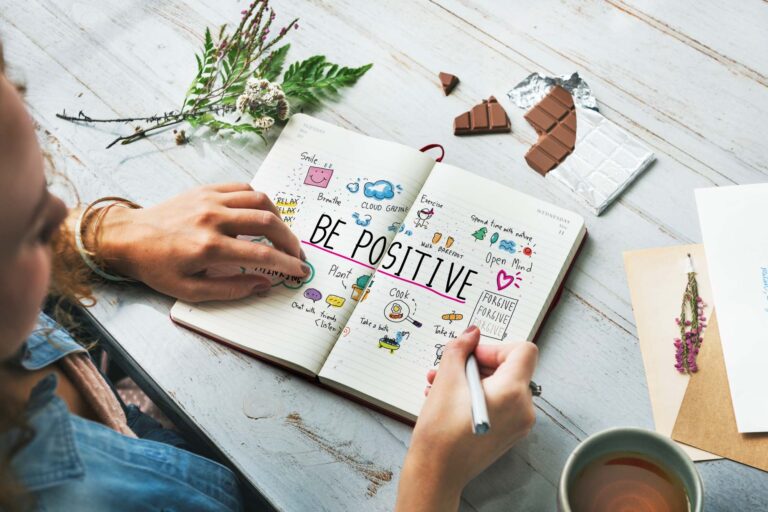

12 quiet emotional resilience habits that build emotional strength
Something small goes sideways today, and somehow it stops being about the small thing. A text left on read a little too long. An offhand comment from a boss that almost certainly meant nothing. One dish left in the sink, and somehow that’s the thing that finally does it. And then the whole afternoon turns into static, replaying it, rehearsing comebacks to arguments nobody’s actually having, deciding the day is basically ruined before lunch.
None of that is dramatic. It’s just an ordinary rough hour. And that is where resilience actually gets built.
Not in a cinematic moment where you overcome adversity with a soundtrack playing. In the small, unseen choices you make when nobody’s watching: react or pause, believe the worst story or ask a better question, push through or finally let yourself rest.
Those quiet choices are emotional resilience habits. They are the small ways you come back to yourself when the day gets loud.
There’s no need to become calmer, more positive, or somehow perfect to practice any of this. That is how emotional resilience gets built, slowly and without pretending you are fine.
This isn’t a “just stay positive” post. What’s coming is something more useful: 12 specific, doable habits, a 7-day practice, and journal prompts for the days when you need to dig a little deeper. Let’s get into it.
Related reads
Emotional strength doesn’t mean being unaffected
Somewhere along the way, “emotional strength” got confused with “never having a reaction.” Like the strong ones don’t cry, don’t get rattled, don’t need anyone.
That’s not strength. That’s suppression wearing a strength costume.
Real emotional strength still cries. Still gets rattled. Still has the hard days where everything feels like too much. The difference isn’t whether the feeling shows up, it’s what happens after. Being emotionally strong isn’t about never getting knocked down. It’s learning how to come back to yourself after you do.
That’s a skill, by the way, not something reserved for people who seem naturally unshakeable. It gets built the same way most real things do: small reps, repeated over time, mostly when nobody’s grading it.
The American Psychological Association describes resilience as the ability to adapt when life gets difficult. Which is good news, because it means nobody has to be born with it. It’s something you can practice.
How emotional resilience habits actually work
Here’s a simple way to think about this, because “just be more resilient” is useless advice. Nobody knows what to do with that.
Here’s the real shape of it. Resilience gets built in three moments: noticing what’s happening inside before reacting to it, returning to something steadier when a hard moment hits, and strengthening the foundation underneath it all, on the ordinary, boring days when nothing’s on fire.
Twelve habits, three parts. Let’s start with the noticing.
When a hard moment hits, start here
If you cannot remember all 12 habits in the moment, come back to these three questions:
- What am I feeling right now?
- What do I know for sure, and what am I guessing?
- What is the smallest helpful next step?
No need to solve the whole situation right away. Just enough space to choose what happens next.

Part one: Notice what’s happening
1. Notice the feeling before the story takes over
There’s a difference between a feeling and the story your brain builds around it, and most of us skip straight to the story.
“I feel disappointed” is a feeling. “Nothing ever works out for me” is a story your brain wrote in about four seconds flat, using that feeling as evidence. The story feels true. It’s rarely accurate.
Try catching it earlier. Before you decide what a moment means, just name what it is. “I feel disappointed” doesn’t need fixing right away. It just needs acknowledging.
Ask yourself: What am I feeling right now, before I decide what it means?
2. Put a simple name to the pressure
Vague overwhelm is exhausting because it has no edges. “I feel like garbage” gives you nowhere to go. “I’m carrying too much today” gives you an actual thing to respond to.
Try naming it more specifically: “I’m unsure how that conversation went.” “I need more time before I can process this.” “I’m disappointed, not broken.” Small distinction, big difference in how it lands.
Naming the moment puts a little space between you and the problem. And that space is where you get to choose your next move instead of just reacting.
Finish this sentence: Right now, the hardest part is ______.
3. Pause before filling in the blanks
A friend hasn’t replied. Someone sounded a little off on the phone. A plan fell through last minute. Maybe there was one mistake in a meeting.
And the brain, being the overachiever it is, fills in the missing information with the worst possible version, fast. They’re mad. It’s over. This is where it all starts to fall apart.
None of that is confirmed. Your brain just hates a blank space, so it writes in an answer. Unfortunately, it often picks the one that hurts the most.
Ask yourself: What do I know for sure, and what am I guessing?
Most of the time you’ll find you’re grieving something that hasn’t actually happened yet.
4. Ask what would help, not what’s wrong with you
Stress has a favorite question and it’s a bad one: “Why am I like this?” “What is wrong with me?” “Why can’t I just handle things like a normal person?”
None of those questions get you anywhere. They just make the moment heavier while you’re already struggling to carry it.
Swap them out. “What do I need right now?” “What would make this 5 percent easier, not perfect, just 5 percent easier?” “What’s one kind thing I could do for myself in the next ten minutes?” These are the questions that actually move you forward. The other kind just keeps you stuck arguing with yourself.
Part two: Return to yourself when life feels hard
5. Make the next step smaller
When everything feels like too much, the instinct is to try to solve the whole thing at once. Don’t. That’s how you end up frozen on the couch at 9pm having done none of it.
No need to fix the whole work problem, just send one email. No need to “get your life together,” just take a shower. No need to journal for an hour, just one honest sentence.
Ask yourself: What’s the smallest useful next step?
Then do just that. The next smallest step will show up once you’ve taken this one.
6. Don’t turn one setback into a verdict about yourself
This is the habit I wish someone had taught me years earlier. One mistake is not a life sentence, but our brains love to treat it like one.
“I made a mistake” is not the same sentence as “I am a failure.” “That relationship ended” is not the same as “I’m unlovable.” “I had a genuinely hard week” doesn’t mean you’re not making progress, it means you had a hard week. People have those. It’s not a special punishment reserved for you.
One hard moment is information. It is not a final verdict.
7. Let discomfort exist without rushing to fix it
Some feelings need action. A lot of them just need time and room to breathe. We’ve gotten really good at avoiding that second kind: scrolling past it, overexplaining it to three friends, working ourselves into exhaustion so we don’t have to sit with it.
Not every uncomfortable feeling is an emergency that needs solving in the next ten minutes, and this isn’t about ignoring real problems or staying in harmful situations. It’s about the everyday stuff, the disappointment that doesn’t need a five-step action plan, the awkwardness after a conversation that didn’t go how you wanted, the low hum of dread before something you can’t control. Most of that just needs a little time to move through you. It does not always need managing.
A lot of us have a version of this rule tucked away somewhere: feel it quickly, fix it faster, move on. Cry for a minute, then pull it together. Get anxious, then problem-solve your way out of it.
The urge makes sense. But it can leave you treating every hard feeling like a problem you have to outrun.
Try a five-minute pause
Try this the next time it comes up: set a timer for five minutes. Sit somewhere you’re comfortable. Breathe slowly and let yourself say, out loud if you can, “this is hard, and I can stay with myself through it.” That’s it. Five minutes. See what happens when you don’t rush it.
8. Repair quickly after you react
Emotional strength isn’t reacting perfectly every time. Nobody does that. It’s noticing when you snapped from a place of stress, and choosing to repair it instead of pretending it didn’t happen or spiraling into shame about it.
“I was overwhelmed earlier, I’m sorry I spoke sharply.”
“I want to rethink what I said.”
“I need a minute before we keep talking about this.”
“Can we come back to this when I’m calmer?”
These sentences take about five seconds to say and they do more for a relationship, including the one with yourself, than perfect self-control ever could.

Part three: Strengthen your inner foundation
9. Keep one small promise to yourself each day
Self-trust doesn’t come from big declarations. It comes from noticing, over and over, that you did what you said you’d do. Small promises are one of the simplest ways to support daily resilience, especially when life feels messy or unpredictable.
Drink water before coffee. Go outside for ten minutes. Write down one feeling before bed. Put your phone away at a set time. Make that appointment you’ve been avoiding for three weeks.
Keep the promise small enough that you can still keep it on your worst day, not just your best one. That’s the point. A promise you can only keep when everything’s going well isn’t teaching you anything.
10. Create a short recovery ritual after hard moments
After something difficult happens, it is easy to act like you’re fine and move straight on to the next thing. Meanwhile, part of you is still replaying it. A recovery ritual gives the moment somewhere to go before it spills into the rest of your day.
A short walk without your phone. A cup of tea, made slowly, on purpose. Five minutes of stretching. Writing down what happened and what you need next. A shower. Sitting outside for a few minutes. One calming song, played all the way through.
This is not about making the problem disappear. It is just a small way of saying, “That was a lot. I am allowed to come down now.”
Choose one ritual and come back to it often. It does not have to be a whole routine. It just has to be something that helps you feel a little more like yourself.
11. Reach for support before you hit your limit
Somewhere we picked up the idea that needing help means not being resilient. It’s the opposite. Knowing when not to carry everything alone is one of the strongest things a person can do.
“Can I talk something through with you?”
“I don’t need advice, I just need someone to listen.”
“I’m having a genuinely hard day, can we check in later?”
“Could you help me think through my next step here?”
None of these are dramatic asks. They’re low-pressure, honest, and they work.
Strength and support aren’t opposites. They’ve never been. The idea that truly strong people handle everything solo is one of the more exhausting myths floating around, and honestly, it tends to get people to a breaking point instead of away from one. Waiting until you’re completely out of capacity before reaching out just means the ask lands heavier, on you and on whoever’s picking up the phone. Reaching earlier, before it’s an emergency, keeps the whole thing smaller and easier for everyone.
The Greater Good Science Center makes a similar point: supportive relationships are part of resilience, not proof that you lack it.
12. Collect proof that you can handle hard things
Save this one for last, because it’s the habit that leaves you with something to hold onto: evidence.
Keep a running list, mental or written, of hard things you’ve gotten through. A difficult conversation you had anyway. A boundary you held even though it felt awful. A hard day you survived, or one where you fell apart and got back up the next morning. A time you rested instead of pushing harder. A time you started again after weeks of procrastinating.
Write down three hard things you’ve survived, learned from, or handled better than you expected to.
Read that list back on the days your brain insists you can’t handle anything. It’s proof, plain and simple, that you’ve handled plenty, you just forgot to keep score.
Try the 7-day quiet strength practice
Reading about resilience habits and practicing them are two different things. Here’s a small, low-pressure way to try a few over the next week.
Day 1: Name one emotion today without judging it. Just “I feel ___,” full stop.
Day 2: Notice one stressful thought and ask, “what do I know for sure?”
Day 3: Take one small next step on something you’ve been avoiding. One step, not the whole thing.
Day 4: Catch one self-critical thought and replace it with a more supportive one.
Day 5: Build a ten-minute recovery ritual after any hard moment that shows up.
Day 6: Ask someone for support, encouragement, or just a listening ear.
Day 7: Write down five pieces of evidence that you can, in fact, handle hard things.
No need to do this perfectly. Honestly, a missed day is fine. The point is practicing returning to yourself, one small moment at a time, not running a flawless streak.

Journal prompts for building emotional strength
Notice your patterns
- What situations make me feel emotionally unsteady most often?
- What story do I tend to tell myself when something goes wrong?
- What feeling have I been avoiding lately?
- What helps me feel safe enough to be honest with myself?
Practice a kinder response
- What would I say to a friend going through this exact thing?
- What do I need more of when life feels heavy?
- What’s one small next step instead of trying to solve everything at once?
- What would it look like to give myself more time here?
Build self-trust
- What’s one promise I can realistically keep for myself this week?
- When have I handled something better than I expected to?
- What boundary would protect my energy right now?
- What does emotional strength actually look like in my real life, not someone else’s highlight reel?
Frequently asked questions about emotional resilience
What are emotional resilience habits?
Emotional resilience habits are small choices you repeat often enough that they start to be there for you on a hard day. It might look like pausing before you send the text, asking yourself what you actually know before assuming the worst, or taking one small next step instead of freezing.
They do not stop difficult feelings from showing up. They just give you a steadier way to meet those feelings when they do.
How do you build resilience when life feels hard?
Resilience gets built by starting small. Name what feels hard, take one manageable next step, cover your basic needs, and resist turning one setback into a verdict on your character. Reach out for support before you hit empty.
When life feels heavy, it is tempting to search for one big solution. Usually, the smaller habits are what help you feel steady enough to face the next part.
Can you build emotional strength every day?
Yes. Emotional strength can grow through ordinary choices, such as pausing before you react, keeping small promises to yourself, repairing after a rough moment, and noticing what you have already survived.
There is no finish line where you become resilient forever. Some weeks will feel easier than others. What matters is learning how to return to yourself when life gets hard.
What is one simple way to build resilience?
Start with one question: “What is the smallest helpful next step?”
This question works because it keeps you moving without demanding that you solve the whole problem at once. One email, one shower, one honest sentence, or one five-minute pause can be enough to help you move forward.
Is emotional resilience the same as being tough?
No. Toughness often acts like nothing hurts. Emotional resilience makes room for the hurt, asks for help when needed, rests when needed, and finds a way back to yourself anyway.
Being resilient does not mean handling everything alone. It means responding to difficult moments with more honesty, care, and self-trust.
Emotional strength grows in the moments you choose yourself
None of this is loud. Nobody’s clapping for you when you pause before reacting or keep a small promise to yourself on a rough Tuesday. That’s kind of the whole point.
Emotional resilience habits aren’t a personality upgrade you either have or don’t. They’re built the same slow, unglamorous way anything real gets built: one small choice at a time, mostly when nobody’s watching.
No need to overhaul the whole thing today. Pick one habit from this list. Just one. Try it this week and see what shifts.