

How to detach from labels and change your life
Most people don’t notice the exact moment it happens – when a feeling stops being temporary and becomes a verdict.
It usually starts small. You miss a workout. Then another. You look around at your messy apartment, the unopened emails, the half-finished project you keep moving to tomorrow, and something in your brain quietly files a report: lazy. That’s what I am.
And once that label sticks, it starts doing something really dangerous. It stops being a description of a moment and starts becoming the story of who you are.
Learning how to detach from labels isn’t a fluffy concept. It’s one of the most practical things you can do if you want to actually change your life – because the label you’ve accepted about yourself will quietly run your decisions, your effort, and your self-belief long before you’re even aware of it.
This post is about that. About the myths that keep labels locked in place. And about what actually happens when you decide to stop letting them have the final word.
Why labels are so hard to shake
Before getting into the myths, it’s worth understanding why they stick so stubbornly in the first place.
It’s not weakness. It’s not a character flaw. It’s your brain doing exactly what brains do – making shortcuts so it doesn’t have to process everything from scratch every single day.
When you repeat a thought enough times, your brain stops treating it as a thought and starts treating it as background fact. It stops questioning it. It just builds on top of it. So when you’ve been calling yourself lazy for five years, your brain isn’t running a fresh analysis every morning. It already has the conclusion on file.
This is exactly how labels affect your life. Not through dramatic announcements, but through small, constant assumptions that run so quietly in the background you stop noticing them. The opportunity you talk yourself out of. The compliment you deflect. The goal you don’t bother writing down because it already feels too far away for someone like you.
The label isn’t just a name. It becomes a lens. And once you’re looking at your whole life through it, the evidence starts stacking up. Not because the label is true, but because your behavior starts conforming to it.
That’s what makes this work so important. And that’s what makes it so hard.

Myth #1: If I feel lazy, that means I am lazy
The truth: feelings are real, but they’re not your identity.
There’s a difference between experiencing something and being something. Tiredness looks like laziness. Burnout looks like laziness. Anxiety, overwhelm, decision fatigue, grief – all of these can look and feel identical to laziness from the inside.
But feeling stuck in mud doesn’t mean you are mud.
Here’s what this looks like in real life. Someone sits down to do a task they’ve been avoiding – reply to an email, start a report, tackle the dishes that have been there for three days. They open the laptop. Close it. Pick up their phone. And the quiet voice says: see? Lazy.
But what if that person hadn’t slept properly in a week? What if they were carrying a conversation they hadn’t processed? What if they were trying to start something with no clear first step and their brain just… shut down?
When you turn a feeling into a label, you stop the investigation. And the investigation is where the answers live. Try asking instead: what’s actually happening here? Not to let yourself off the hook but to get closer to what’s true.
Myth #2: Labels tell the truth about who I am
The truth: labels are learned, not fixed.
Most of the labels you carry weren’t ones you chose. They came from somewhere – a parent who called you the dramatic one, a teacher who said you weren’t detail-oriented, a failure at 22 that your brain filed as permanent proof of something.
The mind repeats what it hears. If “I’m not smart enough” has been playing on loop since you were twelve, it stops feeling like a story. It feels like a fact. That’s how identity labels work. They arrive quietly, get repeated, and eventually just live in your chest like they own the place.
Over time, they shape which opportunities you reach for, how you react when things get hard, how much you let yourself want. Not loudly. Just steadily, in the background.
A label that came from a moment of shame at fifteen doesn’t have the authority to define you at thirty. But it will keep acting like it does until you say otherwise. Questioning a label isn’t about pretending it never existed – it’s about being honest that something absorbed from the outside doesn’t get to be permanent on the inside. Not without your permission.
Myth #3: I have to become a completely different person to change
The truth: change starts with a new story, not a personality transplant.
This one stops a lot of people before they even begin. Because if “not good enough” feels like a core part of who you are, then changing feels like erasing yourself.
But that’s not how it works.
Changing your identity doesn’t mean becoming unrecognizable. It means stopping the habit of speaking over yourself with a name that was never really yours. The person you’re becoming isn’t a stranger – she’s just someone who’s stopped agreeing with the old story.
Small changes in self-talk create real shifts over time. Not because positive thinking is magic, but because the words you use most often about yourself start shaping your expectations. Expectations shape behavior. Behavior creates evidence. And evidence is eventually what you point to when you describe who you are.
Every time you respond to yourself with a little more accuracy and a little less attack, you’re casting a vote for a different story. One vote doesn’t change the election. But over weeks and months, those votes add up.

Myth #4: Being hard on myself will make me more disciplined
The truth: shame keeps people stuck more reliably than almost anything else.
There’s this cultural idea that if you’re not hard enough on yourself, you’ll go soft. That the inner critic is what’s holding the whole thing together.
It’s not.
What shame actually does is make action feel heavier. It makes the gap between where you are and where you want to be feel like proof that something is fundamentally wrong with you. And most people’s response to that feeling? Avoid the whole situation. Scroll. Sleep in. Say they’ll start Monday.
Not because they’re giving up. Because trying feels like setting themselves up for another attack.
Using harsh self-talk as a motivator doesn’t produce discipline. It produces avoidance, exhaustion, and a deeply complicated relationship with starting anything. Self-respect works better – not self-congratulation, just the basic internal decency that says: I’m worth talking to properly, even when I mess up. That kind of safety is what makes starting feel less terrifying.
Myth #5: Detaching from labels means pretending your problems aren’t real
The truth: detaching from labels means telling the truth without making it a verdict.
There’s a real difference between describing what’s happening and defining who you are.
“I’ve been struggling to follow through on things lately” – honest. Useful. Something you can work with.
“I’m a person who never finishes anything” – a verdict. And verdicts don’t help you move. They just make you smaller.
Imagine someone avoiding their inbox. Every day it grows. Every day they feel worse. And the story they tell themselves is: I’m so disorganized. I’m just like this. That story doesn’t help them open the inbox. It just adds shame to the avoidance. Now they’re not just avoiding emails, they’re avoiding the reminder of who they apparently are.
But if the story shifts to: I’ve been overwhelmed and my system isn’t working – now there’s a problem to solve, not a character to condemn.
Detaching from labels doesn’t mean the struggle disappears. It means refusing to let the struggle become your name.
How to detach from labels
Step 1: Find the label you actually use
Not the one you think you should work on. The one that shows up automatically when something goes wrong – the quiet, instant one. Lazy. Too much. Not enough. The kind of person who always gives up.
Name it. Because you can’t detach from something you haven’t noticed yet.
Step 2: Ask better questions
Once you’ve named it, stop asking why am I like this – that question assumes the label is true and goes looking for proof. Ask instead: what’s actually happening here?
If you’re avoiding a task: am I unclear where to start? Scared of doing it wrong? Running on empty? Those are answerable questions. They lead somewhere useful.
Step 3: Use more accurate language
Not more positive. More precise. Your brain can argue with “everything is fine.” It can’t really argue with “I’m having a hard time with this specific thing right now.”
This is where the shift happens – not from dramatic declarations, but from the quiet, steady refusal to accept a sweeping verdict when a more honest description is available.
Step 4: Focus on circumstances, not character
When something goes wrong, look at the situation before you look at the person. What made this hard? What was missing? What would make it easier next time?
That’s not lowering the bar. That’s problem-solving instead of self-condemning and problem-solving actually produces change.
Step 5: Practice the new self-talk even when it feels fake
It will feel strange for a while. That’s not a sign it isn’t working, it’s just what unfamiliar feels like. The old label felt true because it was familiar, not because it was accurate. Give the new language time. Repeat it anyway.
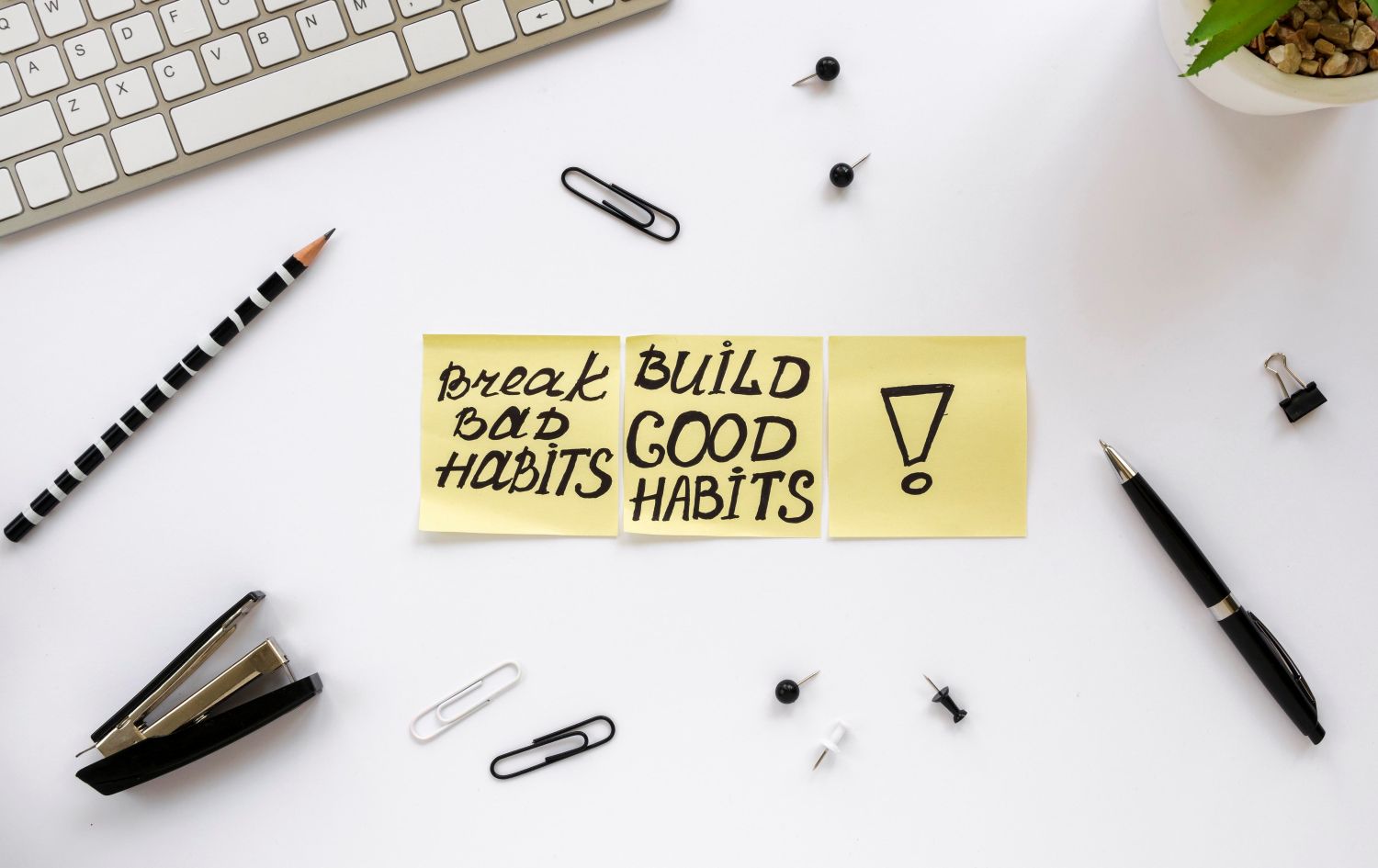
What these shifts actually look like
“I’m lazy” → “I’m struggling to start. What would make this easier?”
“I’m not disciplined” → “My current system isn’t working. What would a smaller version look like?”
“I’m unmotivated” → “Something’s off – am I depleted, unclear, or scared of something?”
“I’m so disorganized” → “Things have piled up. What’s the one thing I can deal with first?”
“I always give up” → “I’ve stopped some things before. What made those different from what I’ve seen through?”
None of these are denials. They’re all honest. They just leave the door open instead of locking it.
The label isn’t the last word
Labels feel like truth because they’ve been repeated long enough to stop feeling like a story. But they’re not permanent. They were never meant to be.
When you decide to stop agreeing with a label that was handed to you – by a moment, a person, a version of yourself who was just trying to make sense of something painful – you’re not erasing your history. You’re refusing to let it be the only thing that gets a vote on what comes next.
The past got to speak. It doesn’t get the final word.
What label have you been carrying that was never really yours to begin with?
If this sounds like you and you want to go deeper – the Self-worth bundle is where a lot of people do the real work on this. It’s built around exactly these patterns: the self-talk, the beliefs, the small daily shifts that actually change how you see yourself over time.