How to stop all-or-nothing thinking in productivity
Here is how the day usually goes. The morning starts strong. The plan is solid. Then something shifts. A meeting runs long, energy drops, the workout does not happen, and suddenly the whole day feels like a write-off.
Not because nothing got done. But because everything did not get done.
Learning how to stop all-or-nothing thinking starts with recognizing that moment. It is not a discipline problem. It is one of the most common reasons people with genuinely high standards end up doing less, not more. This is where all-or-nothing thinking takes over.
All-or-nothing thinking is when anything less than perfect feels like complete failure. To stop al-or-nothing thinking, start by lowering the bar on purpose, planning for imperfect days before they happen, and treating a missed day as information rather than proof that you have failed. Progress over perfection is not a motivational poster. It is the actual strategy.
What all-or-nothing thinking actually is
Black-and-white thinking is when the brain sorts everything into two categories: complete success or total failure. No middle ground. No partial credit. No “good enough.”
In productivity, it sounds like this:
- “If I can’t do my full workout, there’s no point going.”
- “I missed one day so the whole habit is ruined.”
- “I don’t have three hours to work on this, so I won’t start at all.”
- “I already had one bad meal today, so the rest of the day is a write-off.”
The moment conditions are not perfect, the entire effort gets cancelled. That is the loop in a nutshell. If you want a deeper psychology-based explanation of black-and-white thinking, Simply psychology has a helpful overview of all-or-nothing thinking.
The perfectionism procrastination cycle nobody talks about
Perfectionism and procrastination are not opposites. They are the same thing wearing different clothes.
The perfectionist procrastinator does not avoid tasks because she is lazy. She avoids them because starting means risking an imperfect result. And imperfect, to this kind of brain, equals failure. So she waits. For enough time. Enough energy. Enough of everything to do it properly.
That moment almost never comes.
This is how high standards and actual output end up working against each other. The higher the bar, the harder it is to start. The less that gets done, the worse it feels. The worse it feels, the more perfect things need to be before trying again.
Round and round. It is exhausting and it makes complete sense that you are tired of it.

Signs you are stuck in this loop
A few honest check-in questions. Do any of these sound familiar?
- One missed gym day and the whole week feels ruined
- Waiting for life to calm down before starting a new habit
- Feeling guilty for “only” doing 20 minutes instead of an hour
- Quitting mid-month because the month already feels like a loss
- Only counting a day as productive if everything got ticked off
- Feeling like half-effort is worse than no effort at all
This kind of thinking is sneaky because it disguises itself as high standards. It feels like ambition. But underneath, it is usually fear. Fear that something imperfect reflects something broken about you.
It does not. It just means you have a brain that learned to cope through control.
Picture this: it’s Tuesday, the gym session did not happen, and by 11am the day already feels ruined. So the healthy lunch gets skipped too. And the work task that needed doing. Because what is the point, the day is already gone.
Then, somewhere around 3pm, one small choice gets made. A 10-minute walk. Nothing dramatic. But the day stopped unravelling right there.
That is the all-or-nothing loop breaking. Not with a perfect comeback. Just with one small thing.
Why this keeps you stuck
The cruel irony is that this response creates the exact outcome it is trying to prevent.
When everything has to be done perfectly or not at all, tasks feel enormous before they even begin. That heaviness creates pressure. Pressure leads to avoidance. Avoidance creates guilt. Guilt makes the task feel even more loaded the next time around.
It also quietly destroys consistency. Because consistency does not come from perfect streaks. It comes from showing up repeatedly, even badly, even partially, even on the days when you really do not want to.
And here is what often gets missed: a skipped day does not erase what came before it. Three workouts last week still happened. That draft you wrote still exists. Progress is not deleted by one off day. It just feels that way.
How to stop all-or-nothing thinking: Practical shifts that actually work
These are not mindset mantras. These are real changes to how you approach tasks and days.
Set a minimum version of every goal
Before the week starts, decide what the scaled-back version looks like. Not the ideal version. The “life is hard right now” version.
Full workout: 45 minutes at the gym. Minimum version: 15-minute walk.
Full writing session: 2 hours. Minimum version: open the document and write one paragraph.
The minimum version still counts. It keeps momentum moving. And on good days, the minimum often turns into more, because starting is genuinely the hardest part.
Separate your worth from your output
A lot of this is tangled up in self-worth. If the day was productive, the day was good. If it was not, there is something wrong with you.
That is a lot of pressure to put on a to-do list. Output is not a measure of character. It never was.
Treat a missed day like a flat tire, not a car crash
One flat tire does not make you slash the other three. When a day goes sideways, the goal is a fast, quiet return. Not a five-day spiral of guilt followed by a “fresh start Monday.” Just: tomorrow, the minimum version. No dramatic reset required.
Missing once is life. Missing twice in a row is the start of a pattern. Catch it early, return simply.
Ask “what is the smallest useful thing I can do right now?”
This question bypasses the perfectionist brain entirely because it is not asking for much. Just something. Just useful.
Sometimes the answer is five minutes of tidying. A two-sentence email. One set of stretches. Small actions teach something important: starting is safe. Not every task has to be a whole thing.
Plan for imperfect days before they happen
Instead of hoping every day will be a good one, plan explicitly for the bad ones.
Ask yourself: “When I am tired, stressed, or running behind, what will I do instead of nothing?”
Having that answer ready means the decision is already made. No negotiating with yourself in the middle of a hard afternoon.
Why small actions still matter
A 10-minute walk does not feel like much. Neither does one paragraph, one email, or five minutes of tidying.
But small actions do something that skipping entirely cannot: they keep the door open. They tell your brain that moving is still possible, that today is not a total loss, that you are still someone who shows up.
That is not nothing. That is actually everything. Consistency is not built on big days. It is built on all the small ones that happened when you did not feel like it.
Before and after: What the shift sounds like in real life
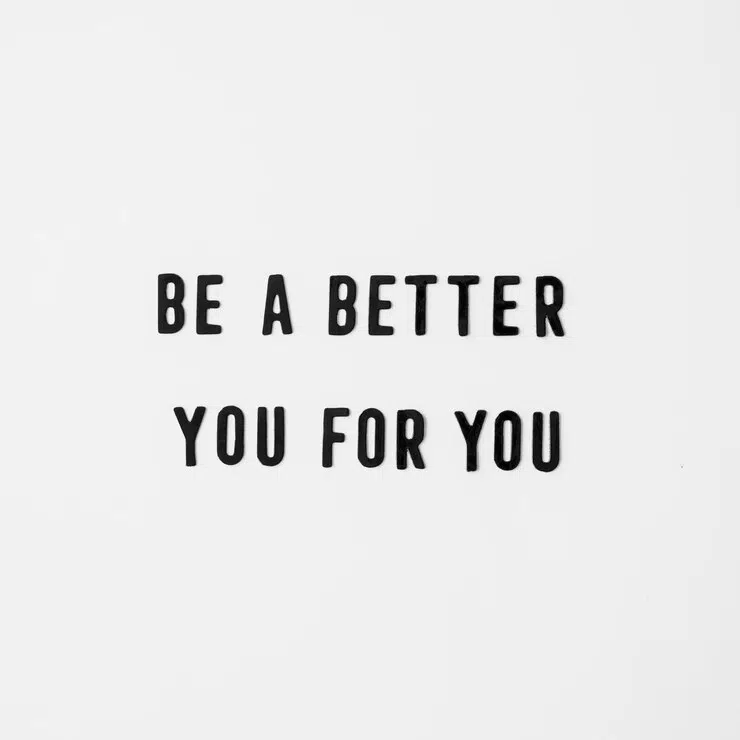
Before: “I only have 20 minutes and I need at least an hour. Not worth starting.” After: “I have 20 minutes. What can I move forward right now?”
Before: “I missed my morning routine, so today is already a bad day.” After: “The morning did not go as planned. The afternoon is still available.”
Before: “I already ate badly today, so I might as well write off the week.” After: “One meal does not define anything. The next choice is still mine.”
Before: “I have not worked on this in two weeks. I have fallen too far behind.” After: “Two weeks off just means it has been two weeks off. Starting today still counts.”
The shift is not about forcing positivity. It is about dropping the rule that says partial effort equals failure.
What a balanced productivity mindset actually looks like
High standards are fine. Good, even. The problem is not wanting things to go well. The problem is making effort conditional on perfection.
A realistic productivity mindset looks like showing up even when it is not going to be your best session. Counting partial effort as real effort. Letting a bad day end without dragging it into the next one. Trusting that steady and boring beats intense and inconsistent almost every time.
That is what sustainable routines are actually made of. Not perfect weeks. Just repeated, flexible, imperfect effort over a long stretch of time.
How to stay consistent without sliding back
A few things that genuinely help:
Notice the trigger thought. The moment something sounds like “if I can’t do it right, there is no point,” pause. That is the thought pattern showing up. Naming it is usually enough to interrupt it.
Celebrate partial wins out loud. “I started even though I did not feel like it” is a win. “I did the minimum and did not quit” is a win. Say it. Write it down. You reinforce what you pay attention to.
Build flexibility into routines by design. Include the hard-day version from the start, so a rough Tuesday is not a deviation from the plan. It is just Tuesday.
Focus on repetition, not performance. The goal is not perfect days. The goal is to keep going through the imperfect ones.
The honest truth about progress over perfection
Nobody builds a consistent habit through flawless execution. They build it by returning, again and again, after the inevitable slip. After the missed week. After the “I have completely fallen off” feeling that pretty much everyone who is actively trying something will hit at some point.
Stopping this cycle is not about caring less. It is about staying in the game instead of sitting out every time conditions are not ideal.
The goal is not a perfect run. The goal is to keep going.
The Procrastination and productivity bundle was built for this exact struggle. Four 30-day workbooks that help you build a steadier system without needing everything to be perfect before you start.
No pressure. Just a place to go if you are ready to work through it properly.