

Small mindset shifts that make change feel possible
Sunday night has a certain energy to it. “This week will be different.” “I’m changing everything.” “I’m done with this version of myself.” It feels good to say. It might even be sincere. Then Wednesday shows up, ordinary and tired, and the declaration is nowhere to be found.
Here’s the thing nobody says out loud: the declaration wasn’t a lie. It was just too big to guide anyone through an actual Tuesday afternoon. A declaration describes who you hope to become. Small mindset shifts change what you do in the next moment. That difference, small as it sounds, is the whole article.
Many people don’t struggle with change because they lack sincerity. They struggle because the plan they made on Sunday has no instructions for Wednesday, when they’re tired and the old thought shows up uninvited and there’s no framework waiting to catch it. Mindset shifts are that framework. They’re smaller than a declaration, less exciting to announce, and considerably more useful at 4pm on a regular day.
Related reads
- From self-doubt to self-trust: Why small promises build real confidence
- 7 small identity shifts that can change your life
- How to change your life: A step-by-step guide to becoming a different version of yourself
- Why celebrating small wins creates big changes
- Self development goals: Choosing who you’re becoming
Big declarations feel powerful, but they’re hard to practice
Declarations are exciting because they’re sweeping. “I will stop procrastinating.” “I will never doubt myself again.” “I am going to completely change my life.” Statements like that light something up. They also don’t tell anyone what to actually do when they’re tired, uncertain, guilty, or three tabs deep in a distraction they didn’t choose on purpose.
Small mindset shifts do the opposite. They’re less dramatic and far more usable. “I can begin for five minutes.” “I can doubt myself and still take the next step.” “I don’t need to change everything today.” “I can pause before agreeing to something.” None of these make a good Instagram caption. All of them are things a person can actually do at 4pm on a hard day, which is exactly when it counts.
This is the quiet flaw in most mindset advice. It sells transformation as a single decision, when transformation usually grows from many small decisions, most of them boring and most of them unwitnessed.
What is a mindset shift, exactly?
A mindset shift is a small change in how a familiar situation gets interpreted or responded to. It doesn’t mean forcing positive thinking or pretending a hard thing feels good. It means choosing a thought that’s more honest and more useful, then letting it guide the next action.
There’s also a reason declarations feel so satisfying to make in the first place. Saying “I’m changing everything” can create a noticeable lift, a little relief and possibility, right there on a Sunday evening. That feeling is real. It’s just not the same thing as change, and treating it like a finish line instead of a starting line is where most resolutions quietly fall apart by midweek. The declaration was never the problem. Expecting it to do the work of a hundred small decisions was.

The declaration-to-shift test
There’s a simple way to turn any big declaration into something practical. Four questions:
- What’s being declared?
- What moment will challenge this declaration?
- What thought would help a different response happen?
- What action would prove that thought today?
Here’s what that looks like worked through:
| Big declaration | Small mindset shift | Practical action |
| “I will stop procrastinating” | “I can begin before I feel ready” | Open the document and work for five minutes |
| “I will become confident” | “I can act while still feeling uncertain” | Share one honest opinion |
| “I will stop people-pleasing” | “My pause is allowed” | Say, “Let me think about it first” |
| “I will completely change my life” | “One aligned choice still matters” | Do one thing that matches what actually matters |
| “I will never fall back into old habits” | “Returning is part of progress” | Resume the practice without starting over |
Notice what’s happening in that middle column. None of those shifted thoughts are especially inspiring on their own. They’re just true enough, and small enough, to actually use. That’s the entire point of the test. A shifted thought doesn’t need to sound impressive. It needs to survive contact with a real moment, which is a much higher bar than sounding good in a journal.
8 small mindset shifts that support real change
Some of these are pure mindset. A few lean into identity. A couple are just about action. Real change usually needs all three. That combination is what practical mindset growth often looks like: a more useful thought, an aligned action, and repeated evidence that a different response is possible.
From “I need motivation” to “I can start small.” Motivation doesn’t need to come first every time. A small enough starting point creates movement on its own, and movement tends to generate more motivation than waiting ever does. This idea is also central to the tiny habits approach, which recommends making a new action so small that it feels easier to do than to skip.
From “This is just who I am” to “This is a pattern I’ve practiced.” This isn’t about promising an overnight personality change. It’s about noticing that most “just who I am” statements are really just well-rehearsed habits, which means they can be rehearsed differently.
From “I need to feel ready” to “I can take one step while uncertain.” Readiness is a feeling, not a prerequisite. Waiting for it usually means waiting indefinitely, since it tends to show up after the first step, not before it. Mel Robbins makes a similar point in her discussion of mindset shifts, confidence, and taking action before you feel ready.
From “I failed again” to “What can this moment teach me?” Worth saying plainly: not every setback needs to become a lesson, and forcing meaning out of a genuinely bad day can feel hollow. This shift is for the moments when there’s actually something useful to notice, not a mandate to spin every failure into growth.
From “I have to change everything” to “What matters today?” Trying to overhaul an entire life at once usually produces an impossible plan and a quiet collapse a week later. One meaningful action, chosen deliberately, beats an ambitious list that never survives contact with a Tuesday.
From “I must do it perfectly” to “I can make this good enough to continue.” Perfectionism and all-or-nothing thinking are close relatives. This shift doesn’t lower the bar. It just makes the bar something a person can actually clear on a normal day.
From “I need to become a new person” to “I can collect evidence of a new response.” This is probably the most important one on the list. Identity doesn’t need to be declared before it’s practiced. It gets built the other way around, through small responses that eventually add up to a different sense of self.
From “I’m starting over” to “I’m returning.” Starting over implies the last attempt is void, wiped clean, wasted. Returning implies continuity. It’s a more honest description of what actually happens after an off day, and a kinder one.
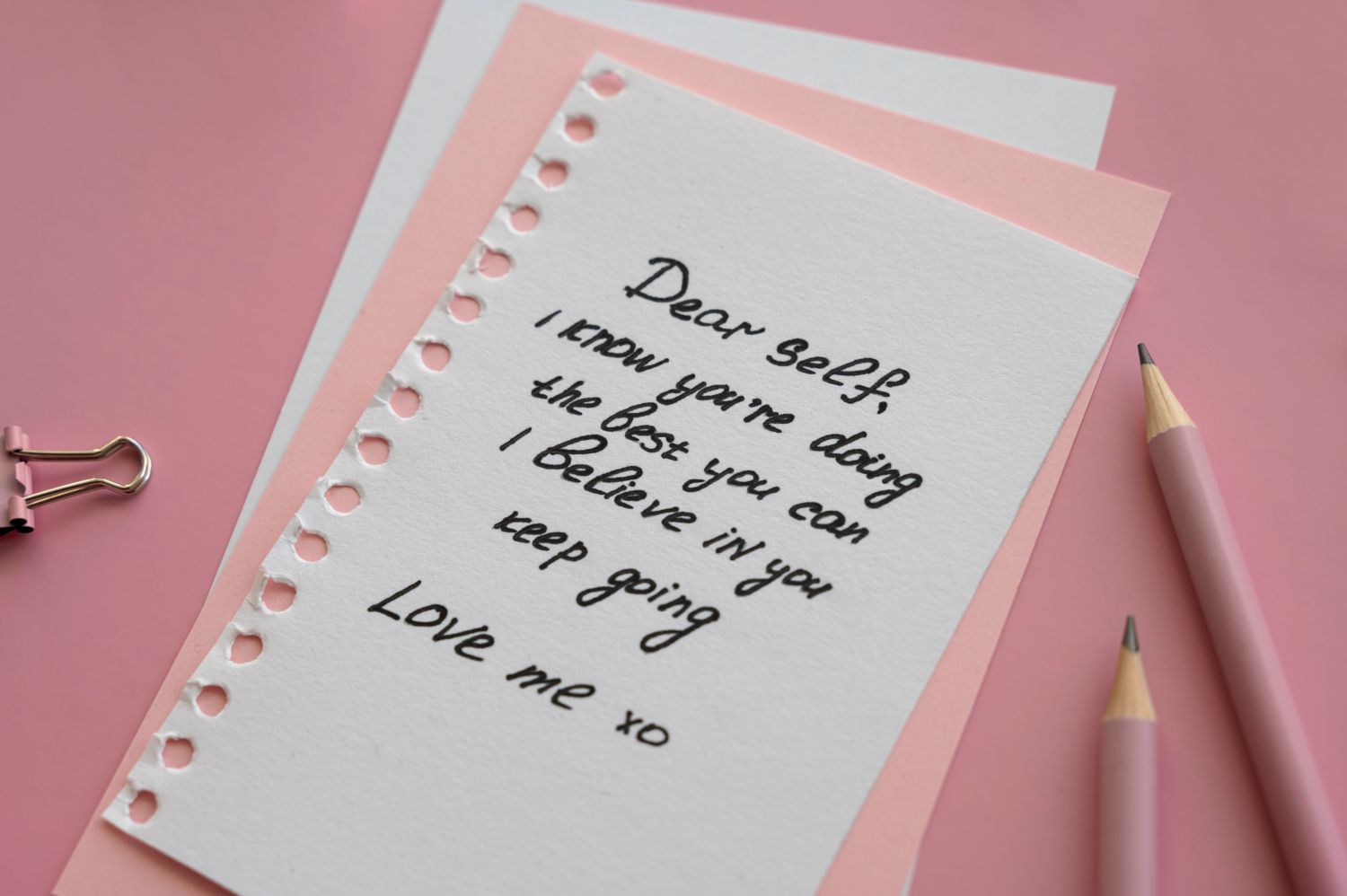
Which mindset shift fits the moment?
Practicing all eight at once isn’t necessary. Choose the one that matches the moment you are struggling with most.
| Struggling with… | Try this shift |
| Waiting for motivation before beginning | “I can start small.” |
| Feeling defined by an old habit | “This is a pattern I’ve practiced.” |
| Waiting to feel confident before acting | “I can take one step while uncertain.” |
| Being harsh about a recent setback | “What can this moment teach me?” |
| Feeling overwhelmed by too many goals | “What matters today?” |
| Getting stopped by perfectionism | “I can make this good enough to continue.” |
| Trying to become a completely different person overnight | “I can collect evidence of a new response.” |
| Falling off a routine | “I’m returning, not starting over.” |
One shift, practiced for a week, tends to do more than eight ideas read once and forgotten by Thursday.
The 30-second mindset shift practice
Most of the eight shifts above are easier to understand than to remember in the actual moment an old pattern shows up. This is a short practice for exactly that moment.
Notice. What thought just appeared?
Name. What old pattern does it belong to?
Shift. What’s a more honest, more useful thought?
Choose. What’s one action that matches it?
Record later. At the end of the day, write down one piece of evidence of responding differently.
The first four steps can take less than a minute. The last one can wait until there’s a quiet moment for it. Think of this as a small mental reset, not a demand to solve an entire life in the middle of a busy afternoon.
The mindset shift itself can happen in 30 seconds. The action that follows may take longer, but it should still be small enough to begin today.
Example: Pausing before saying yes
A friend messages to ask if you can help them that evening. You are already tired and had planned to rest, but your first thought is, “If I say no, they’ll be disappointed in me.”
Notice:
The thought is, “If I say no, they’ll be disappointed in me.”
Name:
This is the people-pleasing pattern that makes someone treat another person’s disappointment as more important than their own needs.
Shift:
“I can care about them without saying yes to everything.”
Choose:
Instead of agreeing immediately, reply, “Let me check what I have going on and get back to you.”
Record later:
Write down: “I paused before answering and gave myself time to choose.”
The goal is not to stop caring what other people think. It is to create enough space to make a choice that considers your needs too. That’s the whole practice. It takes less time to do than it takes to read about.
What’s a fast way to shift my mindset in the moment, not just in theory?
The 30-second mindset shift practice above is built for exactly that. The key is keeping every step small enough to do without stopping what’s happening around it. A shift that requires quiet, alone time, or twenty minutes of reflection won’t get used during a busy day, which defeats the purpose.
How repeated small shifts shape who you become
Identity doesn’t need to be declared before it gets practiced. Nobody becomes self-trusting by repeating “I trust myself” while ignoring every decision that would prove it. Self-trust gets built through smaller, less glamorous moves: pausing before asking everyone else what they think, keeping one small promise, admitting what’s actually needed instead of performing fine, making a decision and accepting that it might not be perfect, returning after a genuinely off day instead of writing the whole week off.
None of that looks like a transformation while it’s happening. It looks like an ordinary Tuesday where one thing got handled slightly differently than it would have a year ago. That’s usually all identity change ever looks like, up close.
It’s worth being honest about how unsatisfying that can feel in the moment.
There’s no ceremony for the version of self-trust that looks like sending a text that sets a boundary, or not checking a phone at 2am, or making a decision without polling five people first. Nobody applauds that.
But identity isn’t built from the moments that get applauded. It’s built from the ones that get repeated, quietly, until they stop feeling like an exception and start feeling like a default.
How do I know if a mindset shift is actually working?
Look for shorter recovery time, not the absence of struggle. A mindset shift is working when the old pattern still shows up, but it takes less time to notice it and choose differently than it used to. That’s a more honest measure of progress than waiting to feel like a completely different person.
How do small mindset shifts lead to big changes?
Small mindset shifts change the choices that get repeated. One shift might help a task get started, a truth get spoken more honestly, a return happen after a setback, or a pause happen before reacting. Repeated choices create evidence that a different response is possible. Over time, that evidence can reshape habits, self-trust, and a broader sense of identity.
A seven-day small shift experiment
One shift per day, low effort, easy to actually complete.
| Day | Practice | Journal prompt |
| Day 1 | Notice one repeated thought. No need to fix it yet. | What thought keeps showing up, and when does it usually appear? |
| Day 2 | Rewrite it into a believable alternative. | What version of this thought feels more honest than comforting? |
| Day 3 | Take one action before feeling ready. | What’s been waiting for a feeling of readiness that hasn’t come? |
| Day 4 | Keep one small promise. | What’s a promise small enough to keep, even on a hard day? |
| Day 5 | Replace an all-or-nothing choice with a “good enough” choice. | Where would good enough serve better than perfect? |
| Day 6 | Practice returning after an imperfect day. | What would returning, instead of restarting, look like today? |
| Day 7 | Record the evidence of what changed. | What’s the smallest piece of proof that something is shifting? |
A few lines each day are enough. The point is having something to look back on besides memory, which tends to underplay gradual change.
Journal prompts for practical mindset shifts
A few more, for whenever the seven-day structure isn’t the right fit and a single question is enough:
- What big declaration keeps getting made, over and over, without much changing?
- What does that declaration fail to explain about how to actually do it?
- What small shift would help during the hardest part of an average day?
- What old identity statement is ready to be questioned?
- What would get done today if feeling completely ready weren’t a requirement?
- What small action would create real evidence that something is changing?
- Where is a permanent transformation being demanded instead of a temporary response being practiced?
- What does returning look like, specifically, after a rough day?
There’s no need to answer all of them at once. One question, actually sat with, does more than eight questions skimmed.
Let your choices say it for you
A dramatic declaration isn’t required here. Neither is a full personality overhaul by next month. What’s required is smaller and more doable: one mindset shift, practiced today, in one specific moment that would have gone the old way otherwise.
There’s no need to announce becoming someone new. Let one small choice show what’s changing. Repeat it often enough, and the choice may stop feeling like an exception and start feeling like part of who you are.
Ready to practice this daily?
If turning these shifts into a regular habit sounds useful, the Mindset & Motivation Workbook Bundle gives structured, daily space to catch old patterns and practice new responses, one small shift at a time.
There’s no need to have every declaration figured out first. One shift, practiced today, is enough to start.